

Quick Summary
Handmade goods cost more because the price carries the maker's time, skill and attention. A factory spreads its costs across millions of identical units, while a maker works one piece at a time, and each piece takes hours of focused effort.
- Skilled labor is the biggest reason handmade goods cost more than mass-produced items.
- A factory can produce thousands of identical items in the time one maker finishes a single piece.
- Handmade makers often use better natural materials, which cost more than standardized alternatives.
- In a sample wallet breakdown, labor was the largest line item at $87.50 per wallet.
- Makers should track real time per unit and build platform fees into the price.
Table of Contents
- Why Handmade Goods Cost More Than Mass-Produced Items
- Handmade vs Mass-Produced Products: A Side-by-Side Cost Comparison
- Breaking Down the Price: An Itemized Cost Example
- How to Price Handmade Crafts Step by Step
- Durability, Lifetime Value and Whether Handmade Is Worth the Price
- How to Identify Authentic Handmade Products Before You Buy
- Choosing Handmade Pieces That Fit Your Budget and Your Values
- Frequently Asked Questions
Why Handmade Goods Cost More Than Mass-Produced Items
Last Updated: November 15, 2026
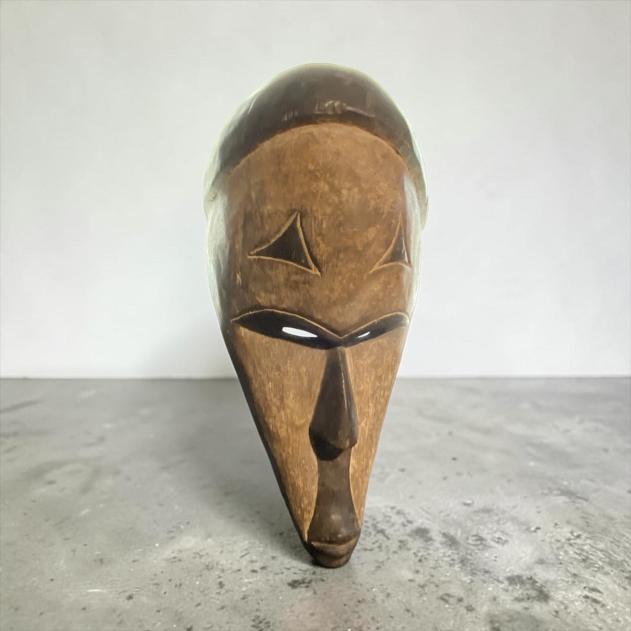
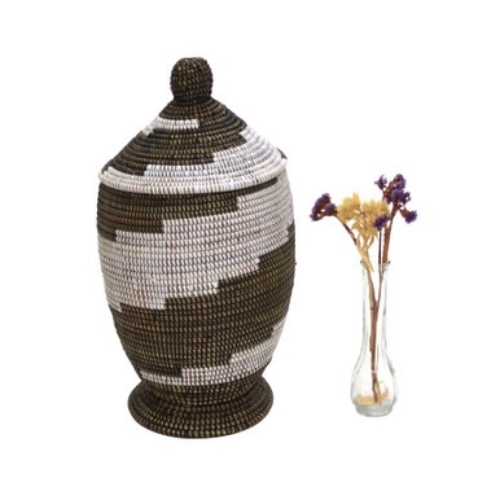
A hand-carved wooden mask or a woven Senegalese basket can cost noticeably more than a similar item from a factory line. The gap is not arbitrary. At The Artisan Square, we see the same question come up again and again: why does this piece cost more when the store down the road sells something that looks alike for less?
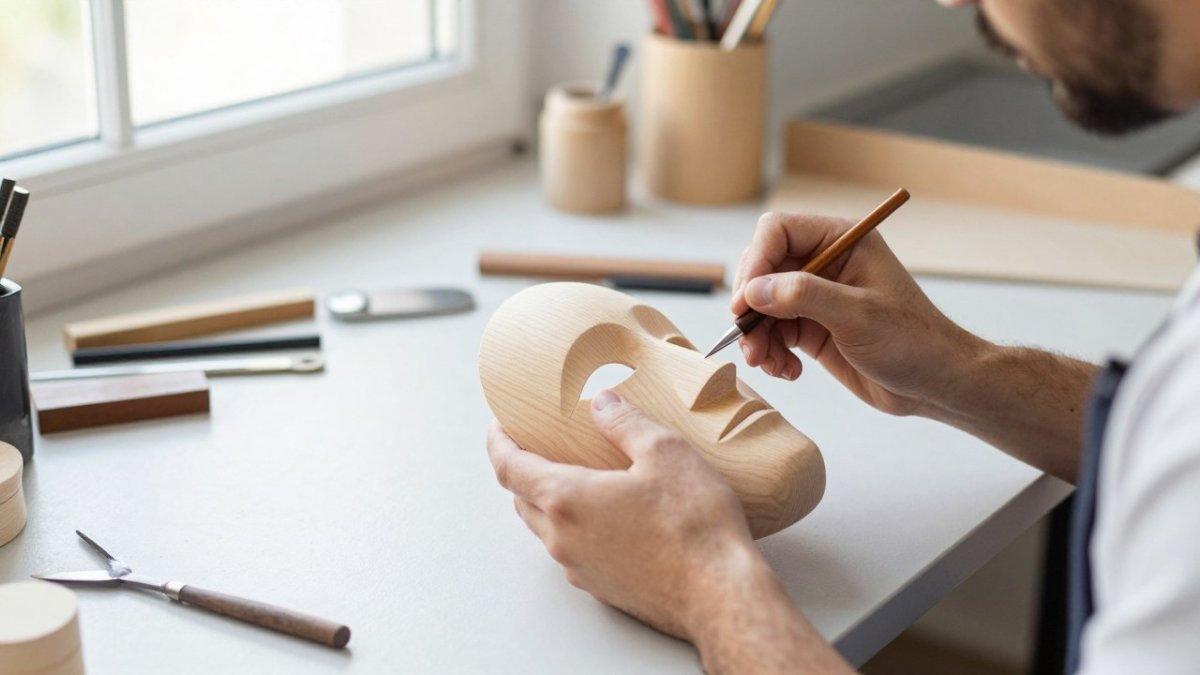
The short answer is that handmade goods carry the cost of a person's time, skill and attention. For a guide to finding such pieces, see where to find authentic artisan goods. A factory spreads its costs across millions of identical units. A maker works one piece at a time, and every piece takes hours of focused effort.
A study on handmade products found that most respondents were willing to pay only slightly more for handmade goods (A Study on the Popularity of Handmade Products by E. Major). That willingness to pay matters, because it shows the price gap is a real tension buyers feel.
Skilled labor and the maker's time
Skilled labor is the biggest reason handmade goods cost more. A maker often spends years learning carving, weaving, dyeing or finishing before they can produce work worth selling.
- Training and practice take years, not weeks
- Each item needs the maker's full attention
- Mistakes are fixed by hand, not thrown out by a machine
- Design choices are made on every piece
Fair pay for that time is part of the price. When a maker underprices their work, they often cannot sustain the craft.
Materials and sourcing costs
Materials also shape the price. Many artisans choose better natural ingredients, woods or fibers, and those cost more than mass-market alternatives.
Handmade vs Mass-Produced Products: A Side-by-Side Cost Comparison
Handmade and mass-produced goods differ most in labor, materials and production time. The table below shows how these factors usually compare.
| Factor | Handmade | Mass-Produced |
|---|---|---|
| Labor per item | High, skilled and hands-on | Low, machine-assisted |
| Materials | Often premium or natural | Often standardized, lower cost |
| Production time | Hours or days per piece | Seconds or minutes per unit |
| Consistency | Small variations, each unique | Near-identical every time |
| Price per unit | Higher | Lower |
Labor, materials and production time compared
Labor and time drive most of the gap. For a closer look at how these cost drivers apply to one product category, read how handmade aromatherapy products are priced. A factory can produce thousands of identical items in the time one maker finishes a single piece. Materials add to the difference, though usually less than labor does.
Small-batch production versus factory-scale output
Small-batch production cannot match the economies of scale that factories enjoy. Factories buy materials in bulk and invest in machines that cut per-item cost. A small studio has no such advantage, so its per-item cost stays high.
Breaking Down the Price: An Itemized Cost Example
Most explanations of handmade pricing stay abstract: time, skill, materials, overhead. That is true but not useful when you are staring at a price tag and wondering where the money actually goes. A transparent breakdown shows the mechanism.
Imagine a maker producing a small batch of hand-finished leather wallets. Suppose one wallet takes 3 hours of hands-on work, plus 30 minutes of shared setup, cleanup, and order admin that must be recovered across the batch. That is 3.5 labor hours per wallet.
- Materials: leather, thread, lining, and hardware. A small-batch maker buying in modest quantities might spend $18 per wallet where a factory buying truckloads spends far less per unit. Materials are usually the easiest cost to see and the least controversial.
- Direct labor: 3.5 hours at a fair rate. If the maker sets $25 per hour to cover both wages and the unpaid time that small businesses carry, labor is $87.50 per wallet. This is almost always the largest line item, and it is the one buyers underestimate most.
- Overhead: studio rent or a share of a home workspace, tools, machine maintenance, utilities, software, and payment processing. A common pattern is to allocate overhead as a percentage of direct labor, often 15 to 30 percent. At 20 percent of $87.50, that is $17.50.
- Packaging and shipping materials: a box, tissue, tape, a care card, and a mailer. Even modest packaging can run $3 to $6 per order; call it $4 here.
- Selling fees: marketplace or payment processing fees typically take a percentage of the sale price plus a fixed amount per transaction. If the platform takes roughly 10 percent, that cost scales with the final price rather than sitting at a fixed number.
- Profit and reinvestment: what remains after costs. This is not a luxury; it funds new tools, samples, mistakes, slow months, and the maker's ability to keep producing.
Add the fixed lines first: $18 materials + $87.50 labor + $17.50 overhead + $4 packaging = $127 in direct and allocated cost before fees and profit. If the maker wants a 10 percent platform fee and a modest 15 percent margin on top, the price has to be set so those percentages come out of the sale, not out of the maker's pocket. A simple way to see it: at a $165 price, the 10 percent fee is $16.50, leaving $148.50; subtract the $127 in costs and the maker keeps about $21.50 before tax and reinvestment. That is the entire 'profit' on a piece that took half a day.
This is why handmade prices can look high next to a factory item. The factory spreads design, tooling, and setup across thousands of units and pays for labor in seconds per item. The maker carries the full setup, the full skill, and the full hour count on every piece.
Watch out: makers who price by doubling materials alone often lose money on labor-heavy products, because materials are the smallest line in the example above. The breakdown only works if labor hours are tracked honestly, including the setup and admin time that never appears in a finished product photo.
Itemized cost of one handmade leather wallet
How to Price Handmade Crafts Step by Step
Most pricing advice for makers is either 'charge what you are worth' or 'double your materials.' Neither is a method.
Step 1: Track real time per unit. Time each stage of one representative piece: sourcing, prep, making, finishing, quality check, photography, listing, packing, and shipping. Most makers find the finished object represents only part of the total.
Step 2: Calculate your true hourly cost. Add up your annual business overhead (workspace, tools, software, insurance, utilities, subscriptions) and divide by the billable hours you can realistically work in a year.
Step 3: Add materials at real replacement cost. Use what it costs to buy the material today, not what you paid last year, and add a small waste allowance for offcuts, dye loss, or breakage.
Step 4: Add fees and shipping as percentages, not afterthoughts. Payment processing and marketplace fees usually take a percentage of the sale price plus a fixed per-transaction amount.
Step 5: Decide your margin and your channel. Retail price, wholesale price, and consignment price are three different numbers. A common wholesale convention is that the wholesale price is roughly half the retail price, which means the maker must be able to produce profitably at that lower number. If the math only works at retail, the product is not ready for wholesale.
Step 6: Test against the market, then adjust the product, not just the price. Compare your price to similar handmade work and to mass-produced alternatives.
A worked example using the wallet from the previous section: 3.5 hours at a $30 true hourly cost is $105; materials are $18 plus a 10 percent waste allowance, about $19.80; packaging is $4. That is $128.80 before fees and margin. At a 10 percent fee and a 15 percent margin, the retail price lands near $168. If the maker wants to sell wholesale at half of retail, the wholesale price is about $84, which is below the $128.80 cost. That is the signal that this product cannot be wholesaled at this hour count without redesigning it. This is the kind of decision a real pricing method forces, and it is why guessing fails.
Watch out: the most common pricing error is setting a price from competitors' tags rather than from your own tracked hours and costs.
Durability, Lifetime Value and Whether Handmade Is Worth the Price
A higher price can still be good value if the item lasts longer. Find out what to expect in handmade jewelry quality. Check the materials and construction before you decide.
How to Identify Authentic Handmade Products Before You Buy
Look for a named maker, a clear story about where the item was made, and photos of the process. Learn how to spot dropshipped items online that are falsely presented as handmade. Ask the seller directly where and how the piece was produced.
Choosing Handmade Pieces That Fit Your Budget and Your Values
You do not have to spend a lot to buy handmade. Learn more about the benefits of buying from independent small makers. Start with one meaningful piece and build over time. Decide which values matter most to you, whether that is supporting small makers, natural materials or unique design, and let those guide your choices.
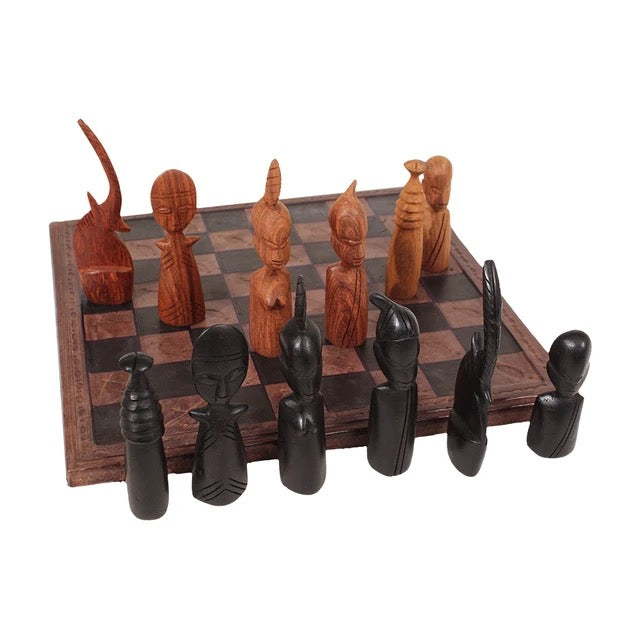
The Artisan Square curates handmade and handcrafted pieces made with care and natural materials. If you want to see the craft for yourself, explore the Leather Board Chess Set, the Cameroon Wooden Mask, or the Senegalese Basket with Lid - Large and find a piece that fits your home.
Frequently Asked Questions
Why are handmade items more expensive?
Handmade items carry the cost of skilled labor, which is paid for each piece rather than spread across thousands of units on a factory line. Makers also work in small batches, so they cannot use the economies of scale that factories rely on, and they pay for quality materials and sourcing. Each item receives individual attention, from shaping and finishing to quality checks. A mass-produced item of similar appearance may cost less because machines, automation and bulk purchasing lower the cost per unit. Handmade pricing reflects that the maker's time and skill are built into every piece.
Are handmade products better than mass-produced products?
Not automatically. Handmade products often offer individual character, finer finishing and a direct link to the maker, and a well-made piece can outlast a cheaper factory item. However, quality varies between makers just as it does between factories. The premium for handmade goods has to be justified by visible value. Check materials, construction and the maker's reputation before assuming handmade means better.
How much should you charge for handmade crafts?
Start by calculating materials, overhead and the hours of labor for each piece, then add a margin that covers your time and business costs. Many makers underprice because they count only materials. A practical method is to track how long one piece takes, set an hourly rate you can live on, and compare the result with what similar handmade items sell for. Test whether buyers accept the price before lowering it, since a price that is too low can signal lower quality.
How can you tell if a product is genuinely handmade?
Look for specifics: the maker's name, where and how the item was made, and photos of the workspace or process. Genuine handmade pieces usually show small variations in shape, stitching or finish, while identical items with perfect uniformity may be factory-made. Ask about materials and production time, and check whether the seller is transparent about who makes the products. Vague 'artisan' wording without a named maker or origin is a warning sign.
