

Last Updated: November 8, 2026
Quick Summary
Buying from independent small makers means your money goes directly to the person who made the item rather than to a warehouse or a brand's marketing budget. The result is handmade quality, pieces that vary or are one of a kind, and support for the local community. Buyers should still compare upfront price with lifetime value and check that a seller really makes what they sell.
- Your money goes to the person who made the piece, not a warehouse or brand budget.
- Handmade pieces are often one of a kind and come with a story behind them.
- Money spent with small businesses tends to stay in the community longer.
- Check whether a seller names the maker, describes materials and explains production.
- Compare lifetime value and cost per use, not just the upfront price.
Table of Contents
- What Independent Small Makers Actually Offer Shoppers
- Benefits of Buying Handmade Products Over Mass-Produced Goods
- How Buying From Small Makers Strengthens Local Economies
- Handmade vs Mass-Produced Products: A Side-by-Side Look at Price and Lifetime Value
- How to Find Authentic Artisan Goods and Verify They Are Handmade
- Buying Directly From Artisans: What to Ask Before You Purchase
- Choosing Your First Handmade Piece From The Artisan Square
- Frequently Asked Questions
Buying from an independent small maker means your money goes to the person who actually made the piece, not to a warehouse or a brand's marketing budget. For shoppers looking at handcrafted goods, that difference shows up in the finished product, in the story behind it, and in the community the purchase supports. The Artisan Square curates handmade and handcrafted goods, from natural hair care and aromatherapy to jewelry and home decor, and we wrote this guide to help you understand the real benefits of buying from independent small makers.
What Independent Small Makers Actually Offer Shoppers
Independent small makers work in small batches, often by hand, and sell directly to the people who buy from them. The result is a shopping experience built around the maker rather than the factory. You can usually find out who made an item, what it is made from, and how it was finished.
Small businesses are a large part of the economy, and buying from them feeds a major share of the economic activity around you.
We see the value in three places: the product itself, the choice you make as a shopper, and the people on the other side of the transaction.
Benefits of Buying Handmade Products Over Mass-Produced Goods
Handmade and mass-produced goods serve different needs, and the best choice depends on what you want from a purchase. Handmade pieces tend to stand out on three points: quality, uniqueness, and the story behind them.
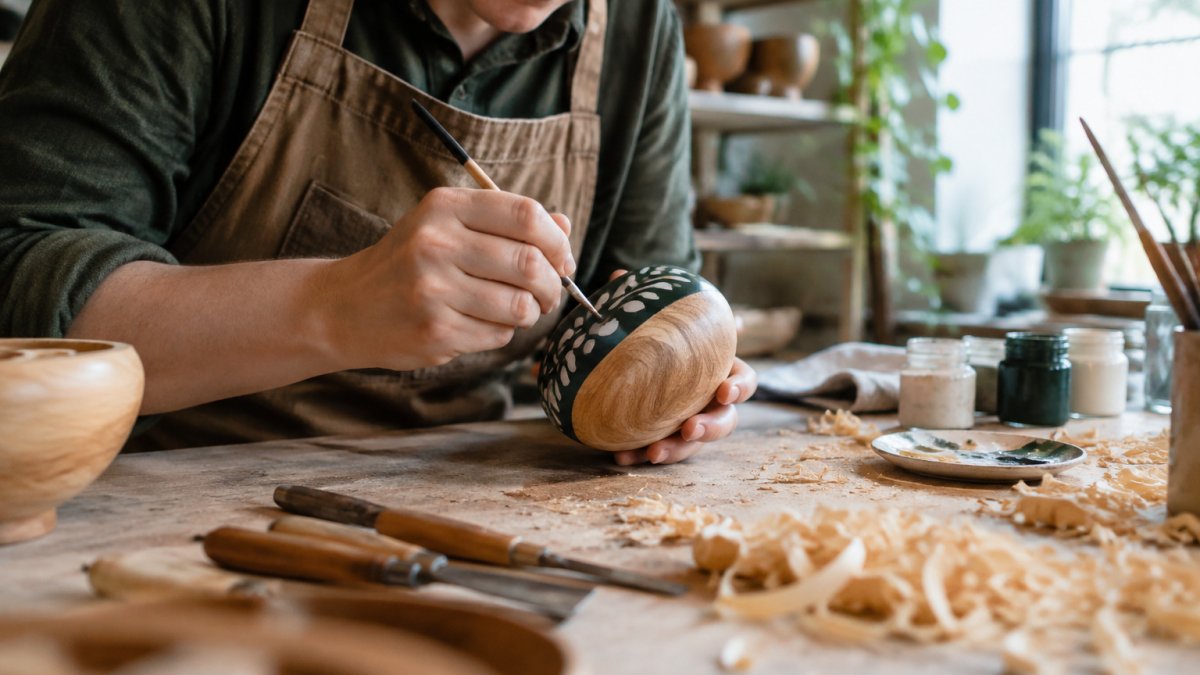
Quality, Craftsmanship and Attention to Detail
A maker working by hand can check each step of a piece as it is made. That attention shows in finish, fit and the small choices that a production line usually skips. Our Sabar Drum is hand-carved and gives the strong, even tones distinctive to the music of Senegal, where it is made.
Handmade quality also depends on materials. Our Leather Board Chess Set combines a leather board in five style options with pieces carved from ebony and teak woods.
One-of-a-Kind Pieces and Personal Stories
Many handmade goods vary slightly from one to the next, and that variation is part of the appeal. Each of our African Cloth Dolls is unique, and the Floral Centerpiece is hand-painted and hand-arranged, so no two are alike. Buying one of these pieces means you own something that is hard to find anywhere else.
How Buying From Small Makers Strengthens Local Economies
Money spent with a local or independent business tends to stay in the community longer.
Small businesses also employ people, so your purchase supports jobs as well as products.
Handmade vs Mass-Produced Products: A Side-by-Side Look at Price and Lifetime Value
Handmade goods usually cost more up front than mass-produced items, and that gap is worth understanding before you buy. For examples, see best handmade jewelry for daily wear. Price reflects labor, small-batch materials and the time a maker spends on each piece. Mass-produced goods are cheaper per unit because they are built at scale. The useful question is not which sticker price is lower, but which purchase costs less over the years you actually own it.
Why the Upfront Price Is Higher
Handmade prices generally reflect the time a maker spends on each piece and the cost of working in small batches.
The Mechanisms Behind Lifetime Value
Lifetime value comes from a few concrete properties, not from the word "handmade" itself.
-
Material choice. Materials such as hardwood and leather are often chosen for their character and finish. Our Leather Board Chess Set pairs a leather board with pieces carved from ebony and teak woods.
-
Cost per use. A piece you keep and use for years spreads its price across far more uses than an inexpensive item you replace every few months.
-
Uniqueness. One-of-a-kind pieces such as our African Cloth Dolls are each unique.
A Practical Comparison
The table below summarizes how the two compare for a typical shopping decision.
| Factor | Handmade from independent makers | Mass-produced |
|---|---|---|
| Upfront price | Higher | Lower |
| Build method | Small batches, often by hand | Factory, high volume |
| Materials | Often chosen for durability and finish | Often chosen for unit cost |
| Repairability | Maker can often repair or refinish | Usually replaced, not repaired |
| Uniqueness | Pieces vary; often one of a kind | Identical items |
| Who you buy from | The maker or a small business | A brand or large retailer |
| Best for | Pieces meant to last and be kept | Low-cost, disposable needs |
The Trade-Offs You Should Expect
Handmade is not automatically better for every purchase, and a fair comparison names the costs on the other side. Lead times can be longer because pieces are made in small batches or to order. Stock is limited, so a color or size you want may sell out. Shipping may be slower and returns less generous than a large retailer's. Customization, where offered, usually adds time and cost. For a quick, inexpensive item you will replace soon, a mass-produced option may genuinely make more sense. The point is to compare like with like: a handmade piece is competing for a place in your home for years, not for the lowest price this week.
Watch out: a high price alone does not prove quality. Ask what the price is paying for, materials, labor, or simply a brand name, before you treat cost as a signal of durability.
How to Find Authentic Artisan Goods and Verify They Are Handmade
Some sellers present mass-produced or dropshipped items as handmade. Checking a few details before you buy helps you avoid that. The goal is not to interrogate every seller but to look for the specific evidence a genuine maker can usually provide and a reseller usually cannot.
Where to Find Independent Makers
Start with places where makers sell directly or are vetted. Local craft fairs, farmers markets and studio tours put you in front of the person who made the work. Maker marketplaces and small shops that name their makers, like The Artisan Square, curate rather than aggregate. Social accounts that show process, work in progress, materials arriving, a bench in use, are often more revealing than a polished product page. When you find a maker you like, check whether the same name and story appear consistently across their shop, site and social profiles.
A Verification Checklist
Work through these checks before you commit:
- Named maker or origin. Products like our African Doll On Stand list where they are made, such as Senegal, and say that each doll varies.
- Material and care details. Authentic makers describe what the item is made from and how to care for it. Vague material claims such as "premium materials" without specifics are worth questioning.
- Variation between pieces. Handmade items often differ slightly. Identical photos and identical specs across many listings can signal mass production.
- Process explanations. A maker who explains how a piece is finished is usually more transparent than one who only shows a polished photo.
- Consistency of story. The maker's name, location and method should match across their shop, website and social accounts. Inconsistencies are a reason to slow down.
- Response quality. Ask a direct question about materials or production time.
- Return policy. A clear policy that covers items that do not match the photos protects you and is common among established small shops.
Questions to Ask a Maker Before You Buy
A short, polite message usually gets a useful answer:
- Who made this item, and where?
- What materials were used, and are they natural or synthetic?
- Does each piece vary, or will I receive an identical copy?
- How long does production take, and when will it ship?
- How should I care for it to keep it in good condition?
- What is the return policy if the item does not match the photos or my expectations?
Clear, specific answers are a good sign. Vague answers or no answers at all are worth noting before you commit.
Watch out: a maker's own photos and process shots can be copied by resellers. Reverse-image searching a product photo and checking whether the same image appears under many different shop names is a quick way to catch a listing that is not what it claims.
For a deeper look at spotting mass-produced goods sold as handmade, see our guide on how to spot dropshipped items online.
Buying Directly From Artisans: What to Ask Before You Purchase
If you can contact a maker or a shop before buying, a few questions will tell you a lot:
- Who made this item, and where?
- What materials were used, and are they natural or synthetic?
- Does each piece vary, or will I receive an identical copy?
- How should I care for it to keep it in good condition?
- What is the return policy if the item does not match the photos or my expectations?
Clear, specific answers are a good sign. Vague answers or no answers at all are worth noting before you commit.
Choosing Your First Handmade Piece From The Artisan Square
Start with something you will use or display often. Our Senegalese Basket with Lid - Large (approximately 22 inches tall with lid) is a home accent that can also store items. The Soy Candles (Handpoured) are priced at $9.99 and are made with soy and cotton wicks. For a centerpiece, the Floral Centerpiece is a conversation starter at $64.99.
If you are shopping for a gift, the Traditional Kwanzaa Set and the Deluxe Kwanzaa Set each include a kinara, candles and a hand-carved Unity Cup, and they are a meaningful choice for the holiday. You can also browse our hand crafted jewelry collection. For a collector's piece, the Leather Board Chess Set is a distinctive option.
Shopping with independent makers is one of the most direct ways to support craftsmanship, local economies and the people behind the work. Browse The Artisan Square's collection to find a piece with a real story, and choose a handmade item you will value for years.
Frequently Asked Questions
What are the benefits of buying from small businesses?
Small businesses are a large part of the economy. For shoppers, the practical benefits are more direct: you usually deal with the person who made or chose the product, you get items that are not mass-produced, and a larger share of your spending tends to stay in your community. Independent makers also often respond personally to questions about materials, sizing and care.
Can I buy directly from an artisan?
Yes. Many independent makers sell through their own websites or curated marketplaces, where you can ask questions before you buy. The Artisan Square lists handmade goods, so you can review each product's description, materials and origin before ordering. Ask about materials, dimensions and care instructions, since a good maker will answer these in detail.
How can I tell whether a product is genuinely handmade?
Look for specific details rather than vague 'artisan' language. Genuine listings name the maker or region, describe the materials, and explain the process, such as hand-painting, hand-carving or hand-woven construction. Slight variations between pieces are a good sign, because they show that each item was made by hand. The Artisan Square's listings, for example, state where each piece is made and note that each doll is unique.
Are handmade products better quality than mass-produced ones?
Not always, and the answer depends on the product. Handmade goods often show more attention to detail and are made in small batches, which can mean better finishing and longer life. Mass-produced items can be more consistent and cheaper per unit. When you compare, check materials, construction and care requirements. For example, the Leather Board Chess Set is made from ebony and teak woods and is priced at $425.99, while the Soy Candles (Handpoured) are made from 100% soy beans with cotton wicks and are priced at $9.99.
