

Last Updated: November 14, 2026
Quick Summary
Handmade aromatherapy products cost more because raw materials are the largest single cost, and small makers spread fixed costs like labour, testing, and packaging across dozens of units instead of thousands. Essential oils also require enormous volumes of plant material to produce a tiny amount of oil, and harvest conditions move prices. You are paying for concentration, sourcing, and human hours that mass production removes.
- The global essential oils market was valued at $13.66 billion in 2025 and is projected to reach $15.01 billion in 2026.
- Essential oils are expensive because it takes an enormous volume of plant material to produce a tiny amount of oil.
- In a small batch of 50 hand-poured candles, essential oils are roughly 20-30% of the batch cost.
- Labour accounts for roughly 20-25% of the batch cost for small-batch aromatherapy candles.
- A product is worth its price when cost per use, ingredient transparency, and testing standards all hold up.
Table of Contents
- Why Handmade Aromatherapy Products Cost More Than You Expect
- Why Are Essential Oils So Expensive?
- Why Are Some Essential Oils So Cheap?
- The Real Cost of Essential Oil Blends
- Handmade Aromatherapy Products vs. Mass-Produced Products
- An Itemised Cost Breakdown for a Small-Batch Aromatherapy Product
- How to Judge Whether an Aromatherapy Product Is Worth Its Price
- Choosing Your First Handmade Aromatherapy Piece at The Artisan Square
- Frequently Asked Questions
Why Handmade Aromatherapy Products Cost More Than You Expect
If you have ever picked up a small bottle of handmade aromatherapy oil, turned it over, and winced at the price, you are not alone. The global essential oils market was valued at $13.66 billion in 2025 and is projected to reach $15.01 billion in 2026, according to Fortune Business Insights' essential oils market report, which tells you demand is climbing fast. But market size does not explain why the little bottle in your hand costs three times what a supermarket blend does.
At The Artisan Square, we hear this question constantly, and it deserves an honest answer rather than a defensive one. Below, we break down exactly where the money goes: raw materials, labour, small batch sizes, testing, and packaging.
Here is the short version: you are not paying extra for a label. You are paying for the concentration, the sourcing, and the human hours that mass production removes.
Why Are Essential Oils So Expensive?
Essential oils are expensive because it takes an enormous volume of plant material to produce a tiny amount of oil. Lavender, rosemary, and citrus all yield only a small fraction of their weight in oil after harvest and extraction, and growing conditions directly affect both yield and quality.
That is the core mechanic most buyers never see. A field of lavender might be harvested at peak bloom, distilled within hours, and still produce a modest quantity of oil relative to the raw plant material that went in. Poor weather, pests, or a short harvest window can shrink that yield further, and the price per bottle moves accordingly.
Ultra International's Spring 2026 market report notes that prices had corrected slightly from previous highs but remained stable with an upward bias, driven by strong perfumery demand and a supply-sensitive market. In plain terms: when the harvest is tight, everyone pays more, including small makers.
Rarity compounds this. Some botanicals are simply harder to grow, harvest, or extract than others, and the price gap between a common oil and a rare one can be steep.
Why Are Some Essential Oils So Cheap?
Some essential oils are cheap because they are diluted, blended with carrier oils, or made from lower-grade plant material, and the label may not tell you which. Johns Hopkins Medicine points out that, because there is no regulation, a product label may not list everything in the bottle, and it also advises against ingesting essential oils.
That is the uncomfortable truth behind a bargain bottle. A $6 "lavender oil" may contain a small amount of true lavender oil stretched with a neutral carrier, or a synthetic fragrance compound that smells similar but is not the same substance.
None of this makes cheap oils automatically bad. A diluted blend can be perfectly pleasant in a diffuser. What it cannot do is deliver the concentration that a genuine, undiluted oil offers, and that difference is exactly what the price reflects.
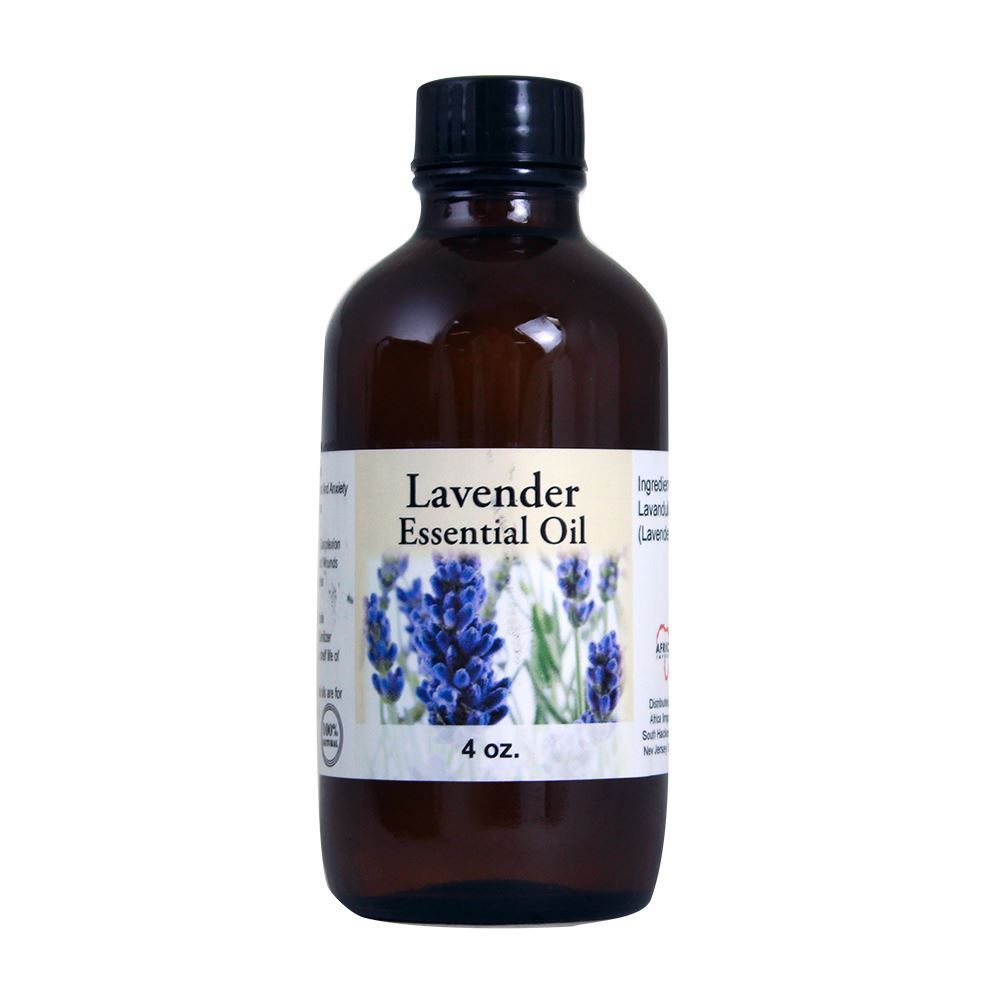
If you want a reference point, our lavender essential oil listing shows the product and its price.
The Real Cost of Essential Oil Blends
A blend costs more than the sum of its oils, because formulation and blending are skilled work, and because the oils themselves vary enormously in price for reasons most buyers never see.
Start with plant yield. It takes an enormous volume of plant material to produce a tiny amount of oil, and the ratio differs dramatically between botanicals.
Growing conditions and harvest timing compound this. Weather, pests, altitude, and the exact week of harvest all affect both the quantity and the character of the oil.
Authenticity is the fourth. An oil can be stretched with a cheaper oil of the same species, blended with a similar-smelling species, or reconstituted from synthetic aroma compounds. Each shortcut lowers the price and changes what the bottle actually contains.
Now consider a simple three-oil blend. The maker buys three separate oils, each at its own price point and each subject to its own harvest risk, then spends time experimenting with ratios until the scent performs as intended.
This is where the cost of essential oil blends quietly climbs. The oils are only part of the bill.
Handmade Aromatherapy Products vs. Mass-Produced Products
Handmade aromatherapy products differ from mass-produced ones in batch size, ingredient transparency, and the amount of human attention each unit receives. A factory can spread its overhead across tens of thousands of units; a small maker spreads the same fixed costs across a few dozen.
Here is how the two compare on the factors that generally drive price:
| Factor | Handmade / Small-Batch | Mass-Produced |
|---|---|---|
| Batch size | Dozens of units | Thousands of units |
| Ingredient sourcing | Often named, single-origin oils | Often blended or unspecified |
| Labour per unit | High, hands-on | Low, machine-driven |
| Quality control | Batch-by-batch testing | Statistical sampling |
| Packaging | Often small-run, by hand | Bulk, automated |
| Cost per unit | Higher | Lower |
The trade-off is real. Mass production wins on price and consistency. Small-batch production wins on traceability and the ability to tell you who made the product and what went into it.
If the broader case for independent makers interests you, our article on the benefits of buying from independent small makers goes deeper into why that traceability matters.
An Itemised Cost Breakdown for a Small-Batch Aromatherapy Product
An itemised cost breakdown shows that raw materials are usually the largest single line, but labour, testing, and packaging together often exceed the ingredient cost.
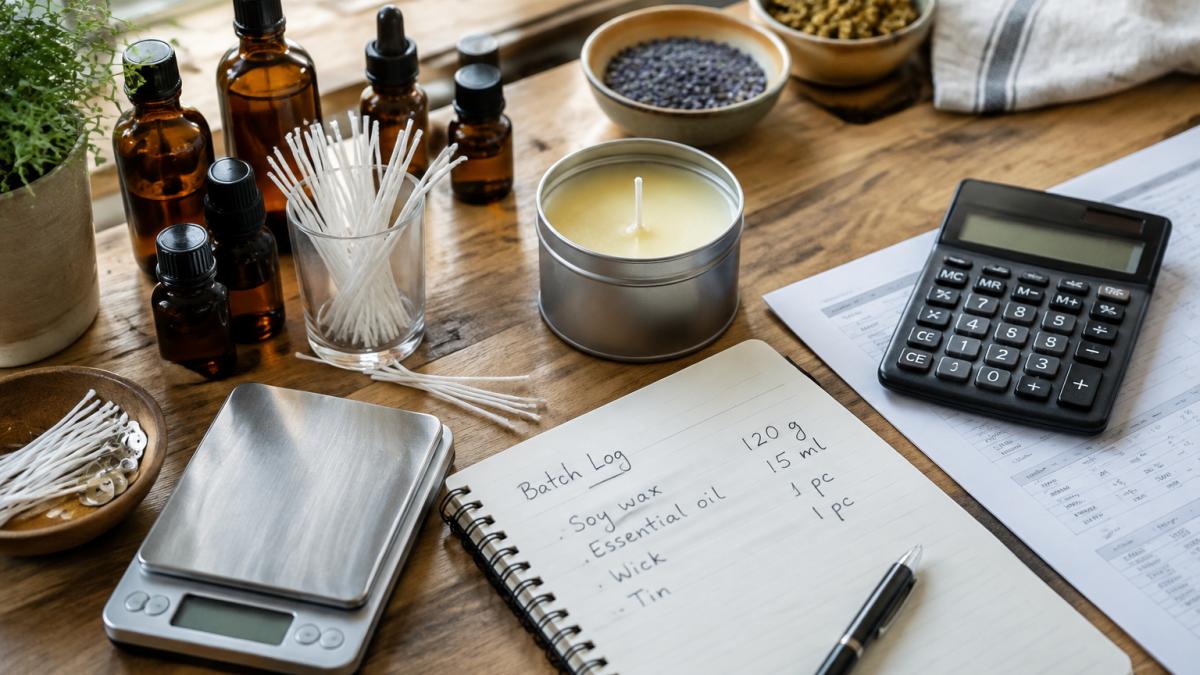
- Essential oils: roughly 20-30% of the batch cost. This is the dominant and most volatile line, because oil prices shift with each harvest and a blend may use two or three oils at different price points.
- Wax or carrier base: roughly 10-15%. Natural soy or plant waxes cost more than paraffin, and the base is bought in modest quantities rather than by the tonne.
- Wicks and containers: roughly 5-10%. Small per unit, but bought at retail or short-wholesale prices rather than factory bulk.
- Labour: roughly 20-25%. Pouring, wicking, labelling, and packing by hand, hour after hour, at a wage the maker can actually live on.
- Testing and quality control: roughly 5-10%. Burn tests, scent trials, stability checks, and rejected batches that never reach a shelf.
- Packaging and labels: roughly 5-10%. Small print runs cost far more per unit than bulk orders, and eco-friendly materials add a premium.
- Overhead: roughly 10-15%. Workspace, storage, insurance, payment processing fees, and the platform that hosts the shop.
Add those up and the arithmetic is revealing. If the batch costs, say, a few hundred pounds or dollars in total and yields 50 candles, the cost per candle before any profit is already well above the price of a supermarket candle.
The same logic applies to oils and sprays, though the proportions shift. For a 10 ml essential oil blend, the oil itself may be 40-50% of the cost, the bottle and dropper 15-20%, labour and blending 15-20%, and testing, labelling, and overhead the rest.
Watch out: a maker who quotes only the oil cost and ignores labour, testing, and overhead is not giving you a true cost breakdown, and a price built on that omission will either be unsustainable or hide a quality shortcut.
Cost Breakdown of a Small-Batch Aromatherapy Product
How to Judge Whether an Aromatherapy Product Is Worth Its Price
A product is worth its price when the cost per use, the ingredient transparency, and the maker's testing standards all hold up. Price alone tells you nothing; a high price does not by itself prove quality. The Tisserand Institute's case for evidence-based aromatherapy makes the point that rigorous research evidence, not price, should underpin a credible practice.
Use this checklist before you buy:
- Does the label name the plant and the oil, or just say "fragrance"?
- Is the dilution stated, or is the oil sold undiluted with clear guidance?
- Can the maker tell you where the plant material came from?
- Is there any mention of batch testing or quality control?
- Does the price make sense per use, not just per bottle?
- Are the safety directions clear, including external-use-only warnings?
Two products can cost the same and be worth very different amounts. The checklist separates them faster than the price tag does.
For practical guidance on choosing natural aromatherapy products for stress relief, our guide to natural aromatherapy for stress relief walks through which oils suit which moments.
Choosing Your First Handmade Aromatherapy Piece at The Artisan Square
Start with a single product that lets you judge quality for yourself rather than committing to a full collection. A hand-poured candle or a single-origin essential oil is the easiest entry point, because both let you smell the difference immediately.
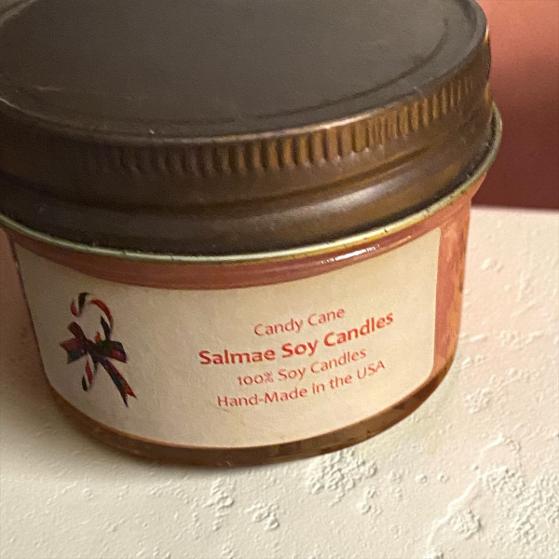
Our hand-poured soy candles are made from 100% soy beans blended with natural essential oils and set with 100% cotton wicks, and each one burns for over 100 hours.
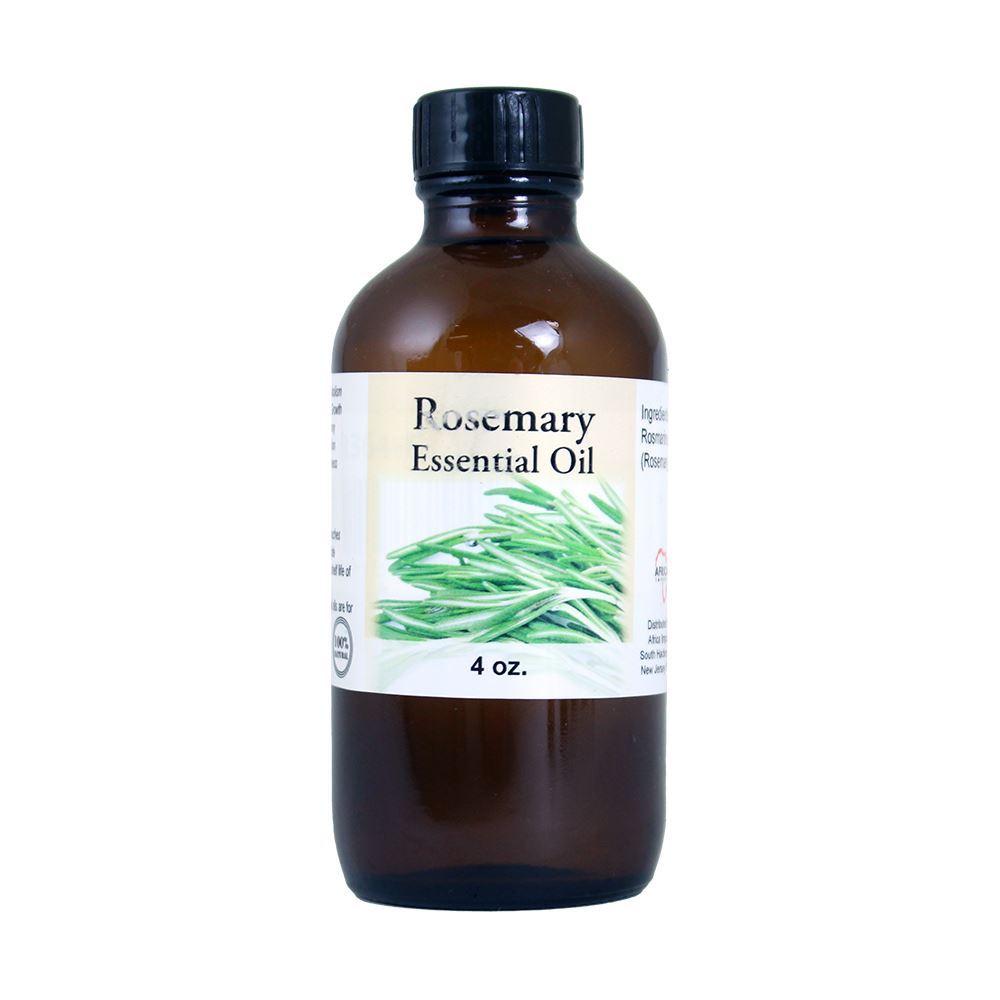
If you prefer oils, our rosemary essential oil is a 4 oz option with a fresh, herbaceous, camphoraceous character that suits diffuser use.
The challenge is not finding aromatherapy products; it is finding ones where the price and the quality actually match. The Artisan Square offers a curated collection of handmade and handcrafted goods, with a focus on natural ingredients across aromatherapy, self-care, and home pieces. Browse the collection and you can see the product, the ingredients, and the price in one place before you decide. Get started with The Artisan Square and choose an aromatherapy piece you can actually trace back to its maker.
Frequently Asked Questions
Are handmade aromatherapy products worth the cost?
It depends on what you are paying for. A handmade aromatherapy product can carry higher ingredient and labour costs than a mass-produced one, and the price may reflect smaller batches. Judge value by asking three things: is the essential oil named and traceable, is the dilution stated, and does the maker explain their batch size. If those answers are clear, the extra spend buys transparency you rarely get from a high-street candle or blend.
Why are some essential oils so cheap compared with others?
Price gaps usually come down to oil yield, rarity and how the plant material was grown and harvested. Crops that give up a lot of oil per kilogram of plant matter cost less to produce than flowers that need huge volumes for a few millilitres. Adulteration and dilution also push prices down, and Johns Hopkins Medicine notes that because there is no regulation, a label may not list everything in the bottle. A very low price is a prompt to read the label closely, not proof of a bargain.
What is the 30/50/20 rule for essential oils?
It is a rough budgeting guide some buyers use to think about how a blend's cost is split between its components. Treat it as a sanity check rather than a standard. If a blend claims a rare oil at a price that leaves nothing for the oil itself, the arithmetic does not work, and that is your signal to ask the maker what is actually inside.
How can I tell if a handmade aromatherapy product is genuinely handmade?
Ask who made it and where. A genuine small-batch maker can usually name the person, the batch date and the oils used, and will answer questions about dilution and shelf life without hesitation. Look for batch numbers, stated essential oil names rather than vague natural fragrance, and consistent product photos. A maker who talks openly about testing and sourcing is generally a better sign than one who only talks about mood.
