

Last Updated: October 23, 2026
Quick Summary
To spot dropshipped items online, use reverse image search to find where product photos appear across multiple websites, compare identical listings and descriptions across marketplaces, and check shipping times and origins that don't match the seller's claimed location. These methods reveal whether a seller is sourcing from suppliers rather than creating or curating unique pieces.
- Use Google Images reverse search to find if the same product photo appears on wholesale sites like AliExpress or multiple seller storefronts.
- Compare product listings across Amazon, eBay, Etsy, and AliExpress for identical descriptions and prices that signal a standard wholesale markup.
- Check shipping estimates and origins; dropshipped items typically take 2-3 weeks and ship from overseas locations.
- Ask sellers detailed questions about materials, production time, and workspace; real artisans give specific answers while dropshippers provide generic responses.
- Watch for red flags like hundreds of unrelated products, vague contact information, and missing About Us pages on seller websites.
Table of Contents
- Why Spotting Dropshipped Items Matters to Your Purchase
- Signs of a Dropshipping Website: What to Look For
- Step 1: Use Reverse Image Search for Products
- Step 2: Compare Product Listings Across Marketplaces
- Step 3: Check Shipping Times and Delivery Estimates
- Dropshipped Product Examples: Common Red Flags
- Questions to Ask a Handmade Seller
- What to Do After You Identify a Likely Dropshipped Listing
- Frequently Asked Questions
Why Spotting Dropshipped Items Matters to Your Purchase
When you shop online for handcrafted goods, you want to know what you're actually buying and be able to spot dropshipped items. The difference between authentic artisan products and dropshipped mass-market items isn't always obvious at first glance.
Spotting dropshipped items online protects your wallet and your values. You avoid overpaying for items you could get cheaper elsewhere. More importantly, you support real artisans instead of middlemen.
The challenge is real. A product photo alone often isn't enough to determine whether an item is dropshipped. Michigan's consumer protection guidance notes that it can be hard to spot a fake item based on a picture alone, and advises looking for suspicious names or misspellings in a brand name or trademark.
This guide walks you through concrete methods to spot dropshipped items before you buy. We'll show you practical steps you can take right now, on your phone or computer, to verify whether a product is truly handcrafted or mass-produced.
Signs of a Dropshipping Website: What to Look For
Not every dropshipping store is deceptive, but certain patterns signal that a seller isn't creating or hand-selecting their inventory. Learning to recognize these signs of a dropshipping website saves you time and money.
Generic product catalogs and unusually broad selection
A genuine artisan business focuses on what they make or curate. Their catalog reflects their expertise and values. A dropshipping operation, by contrast, sells everything under the sun.
Look for these warning signs:
- Hundreds or thousands of products across wildly different categories
- Product descriptions that feel generic or copied
- No clear story about why these specific items were chosen
- Items that have nothing to do with each other (aromatherapy candles next to phone cases next to kitchen gadgets)
Real artisans have boundaries. They specialize. The Artisan Square, for example, focuses on natural personal care, aromatherapy, jewelry, and home decor, categories that align with a wellness and craftsmanship philosophy. That focus matters because it signals curation and expertise.
If a store sells everything, ask yourself: Did one person or small team really source or make all of this? The answer is usually no.
Vague or missing contact and return information
Legitimate businesses want you to reach them. They post clear contact information because they stand behind their products.
Dropshipping stores often hide behind vague policies. Check for:
- No physical address listed anywhere
- Email contact only, with no phone number or social media presence
- Return policies that are unclear or unusually restrictive
- No information about who actually made the products
- Generic "customer service" language with no names or faces
Real artisans often share their story. You might find the maker's name, their location, or a photo of their studio. That transparency builds trust. If a store tells you nothing about who's behind it, that's a red flag.
Step 1: Use Reverse Image Search for Products
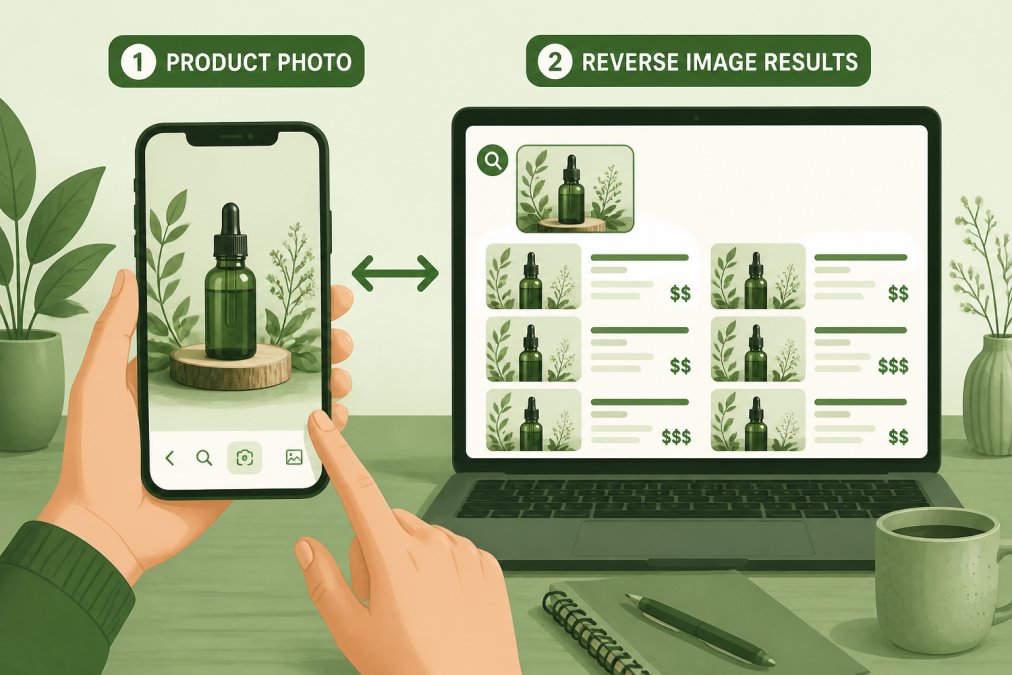
Reverse image search is your most powerful tool for spotting dropshipped items online. It works by letting you upload a product photo and see where else that exact image appears online. If the same photo shows up on ten different websites with different seller names, you've found a red flag.
How to perform reverse image search on desktop
Start on Google Images. The process takes two minutes.
- Go to images.google.com
- Click the camera icon in the search bar
- Select "Upload an image"
- Choose the product photo from the listing you're investigating
- Review the results
Google will show you every website where that exact image appears. If you see the same product photo on multiple sellers' sites, multiple marketplaces, or a supplier's catalog, that's strong evidence the item is dropshipped.
Look specifically for:
- The same photo on AliExpress, Alibaba, or other wholesale sites
- The image on multiple seller storefronts with different brand names
- Reverse results showing the photo on a manufacturer's catalog page
- Identical photos with slightly different product names or descriptions
Real artisans take their own photos. Their images are unique. Dropshippers pull photos from suppliers.
Mobile-friendly reverse image search methods
You can do reverse image search on your phone too. The process is slightly different depending on your device.
On iPhone:
- Open the product listing in Safari or your browser
- Long-press the product image
- Tap "Copy"
- Go to images.google.com
- Tap the camera icon
- Tap "Paste"
- Search
On Android:
- Long-press the product image
- Select "Search image with Google Lens"
- Wait for results to load
Both methods work. Mobile search is slower than desktop, but it's faster than typing a URL or uploading from your phone's camera roll. Use whichever is easier for you in the moment.
Step 2: Compare Product Listings Across Marketplaces
The same product often appears on multiple platforms. Comparing listings reveals patterns that signal dropshipping.
Search for the product name on:
- Amazon
- eBay
- Etsy
- AliExpress
- The seller's own website
If you find the exact same product with identical descriptions on five different sites, it's almost certainly dropshipped.
Pay attention to these details:
- Identical product descriptions word-for-word across sites
- Same price on multiple platforms (suggests a standard wholesale markup)
- Different seller names but identical photos and specs
- The product appearing on both a retail site and a wholesale site like AliExpress
When you compare product listings across marketplaces, you're looking for evidence of a supply chain. Real artisans have one source: themselves. Dropshippers have a supplier, and that supplier sells to multiple resellers.
Step 3: Check Shipping Times and Delivery Estimates
Shipping speed tells you a lot about where a product actually comes from.
Genuine artisans make or curate products locally. They ship from a location near you, or at least from within the same country. Dropshippers ship from warehouses, often overseas.
Check the shipping details:
- Estimated delivery time (2-3 weeks often signals overseas shipping)
- Shipping origin location (does it match where the seller claims to be based?)
- Customs charges mentioned (a sign the item is crossing international borders)
- Tracking information (dropshipped items sometimes have odd tracking patterns or delays at customs)
If a seller claims to be a local artisan but shipping takes three weeks and originates from China, something doesn't add up.
Dropshipped Product Examples: Common Red Flags
Certain product categories are more commonly dropshipped than others. Knowing which ones helps you stay alert.
High-risk categories:
- Trendy phone accessories and tech gadgets
- Novelty home decor items (especially those with viral social media appeal)
- Jewelry with generic designs (not custom or clearly handcrafted)
- Wellness products with vague health claims
- Items with misspelled or suspicious brand names
These aren't always dropshipped, but they appear on dropshipping sites frequently. When you see a product in these categories, apply extra scrutiny.
Lower-risk categories:
- Handmade items with clear maker attribution
- Products sold through established artisan platforms
- Items with transparent ingredient lists (for personal care)
- Goods with detailed origin stories
- Pieces that show clear signs of handwork (visible variations, imperfections that signal human creation)
The difference often comes down to transparency and specificity. A real artisan can tell you exactly why they chose certain materials, how they make the product, and who they are. A dropshipper offers generic descriptions and vague brand names.
Questions to Ask a Handmade Seller
Before you buy, reach out and ask direct questions. Real artisans are happy to answer. Dropshippers often give vague or delayed responses.
Ask:
- "Who makes this product? Can you tell me about them?"
- "What materials do you use, and where do you source them?"
- "How long does it take you to make this item?"
- "Can you show me photos of your studio or workspace?"
- "If I order this again in three months, will it be exactly the same or will there be natural variations?"
- "What's your return policy if the item doesn't match the photos or doesn't work for me?"
Pay attention to the response quality:
- Detailed, personal answers suggest a real artisan
- Generic copy-paste replies suggest a dropshipper
- Evasive answers or delays are warning signs
- Willingness to share photos or connect on social media is a good sign
- Refusal to answer specific questions is a red flag
Real makers are proud of their work. They want to tell you about it. If a seller can't or won't answer basic questions about their products, move on.
What to Do After You Identify a Likely Dropshipped Listing
If you've applied these methods and concluded a product is dropshipped, you have options.
Option 1: Don't buy from that seller. This is the simplest choice. Move on to a verified artisan or a trusted retailer you know curates genuine handmade goods.
Option 4: Ask the seller directly. Sometimes sellers are upfront about dropshipping. They might say "We source carefully curated items from trusted suppliers." That's honest.
The key is making an informed decision. Once you know what you're buying, you can decide if it's worth the price and whether it aligns with your values.
When you shop at The Artisan Square, we handle this verification work for you.
Frequently Asked Questions
How can you tell if something is dropshipped?
Look for multiple red flags together: product photos that appear on other websites (verified via reverse image search), unusually long shipping times (2-4 weeks or longer), generic product descriptions, vague seller contact information, and the same item listed at different prices across marketplaces. No single indicator proves dropshipping, but a combination of these signals suggests the item may not be sourced directly from the original maker or authorized retailer.
Can reverse image search help identify a dropshipped product?
Yes. Reverse image search is one of the most reliable tools. Right-click a product photo, select 'Search Image with Google,' and see where else that exact photo appears online. If the same image shows up on multiple unrelated storefronts, multiple marketplaces, or a supplier's catalog, the product is likely dropshipped. This method works on both desktop and mobile browsers, though mobile steps differ slightly.
What are common signs of a dropshipping store?
Common signs include a massive product catalog with items from unrelated categories (fashion, electronics, home goods all mixed together), no clear company history or 'About Us' information, missing or generic contact details, poor-quality or copied product descriptions, no physical address or phone number, and vague return policies. Authentic artisan retailers typically have focused product selections, transparent maker information, and clear policies about returns and shipping.
What questions should I ask a handmade seller before buying?
Ask: 'Who made this product?' 'Where is it made?' 'How long does it typically take to ship?' 'What's your return or satisfaction guarantee?' 'Can you show me your production process or workshop?' 'Are these made to order or from existing stock?' Genuine artisans can answer these questions with specifics. Dropshipped products often result in vague answers, redirects to generic policies, or silence. Transparency about sourcing and production is a strong indicator of authenticity.
