

Last Updated: November 19, 2026
Quick Summary
To buy ethical jewelry online, verify before you pay: confirm the maker's identity, material origin, certification and return policy, and walk away if a shop fails three or more of these seven checks. Ethical jewelry is jewelry whose materials, labor and supply chain can be traced and verified, not simply described as conscious on a product page.
- Ask which country the metal was refined in and who assembled the piece.
- Sort claims into three tiers: assertion, specific claim and documented evidence.
- Ask for a certificate number and look it up on the issuer's public registry.
- Lab-created gems run 30-40% cheaper than mined diamonds, per Trustpilot's ethical jewelry guide.
- Judge brands on named makers, stated materials, a real return policy and a reachable human.
Table of Contents
- Start With a Verification Checklist Before You Buy Ethical Jewelry
- How to Verify Jewelry Sourcing and Traceability
- Spot Vague Ethical Claims and Greenwashing Before You Pay
- Compare Certifications and What Each One Actually Covers
- Ethical Gold Jewelry: Recycled, Fair Trade and Lab-Grown Compared
- Best Ethical Jewelry Brands and How to Judge Them
- Check Returns, Purchase Protection and Total Cost Before Checkout
- Shop the Artisan Square Collection With Confidence
- Frequently Asked Questions
Start With a Verification Checklist Before You Buy Ethical Jewelry
Jewelry e-commerce converts at just 1.2% and returns run at 9.8%, according to WisePIM's 2026 jewelry ecommerce statistics, which tells you most shoppers hesitate before they commit.
Ethical jewelry is jewelry whose materials, labor and supply chain can be traced and verified, not simply described as "conscious" on a product page. That definition is the whole game.
A 2025 study in MDPI's research on sustainability in the high jewelry industry found that consumer education paired with online interaction leads to greater adoption of ethical jewelry.
The Seven Checks That Separate Real Makers From Resellers
Run these before checkout. Each takes under two minutes.
| Check | What to Look For | Red Flag |
|---|---|---|
| Maker identity | Named artisan, studio or workshop | "Designed in-house," no names |
| Material origin | Metal type and source stated | "Silver-tone," "gold finish" |
| Certification | Third-party verification named | Badge with no issuer |
| Production method | Handmade, small-batch or cast explained | Vague "artisan crafted" |
| Photo consistency | Multiple angles, scale references | Only styled lifestyle shots |
| Return policy | Written window and conditions | Final sale, no exceptions |
| Contactability | Real address, responsive replies | Email form only |
If a shop fails three or more, walk away. Two or fewer, ask direct questions before buying.
How to Verify Jewelry Sourcing and Traceability
Traceability means you can follow a piece from material origin to finished object, and most online stores cannot show you that path.
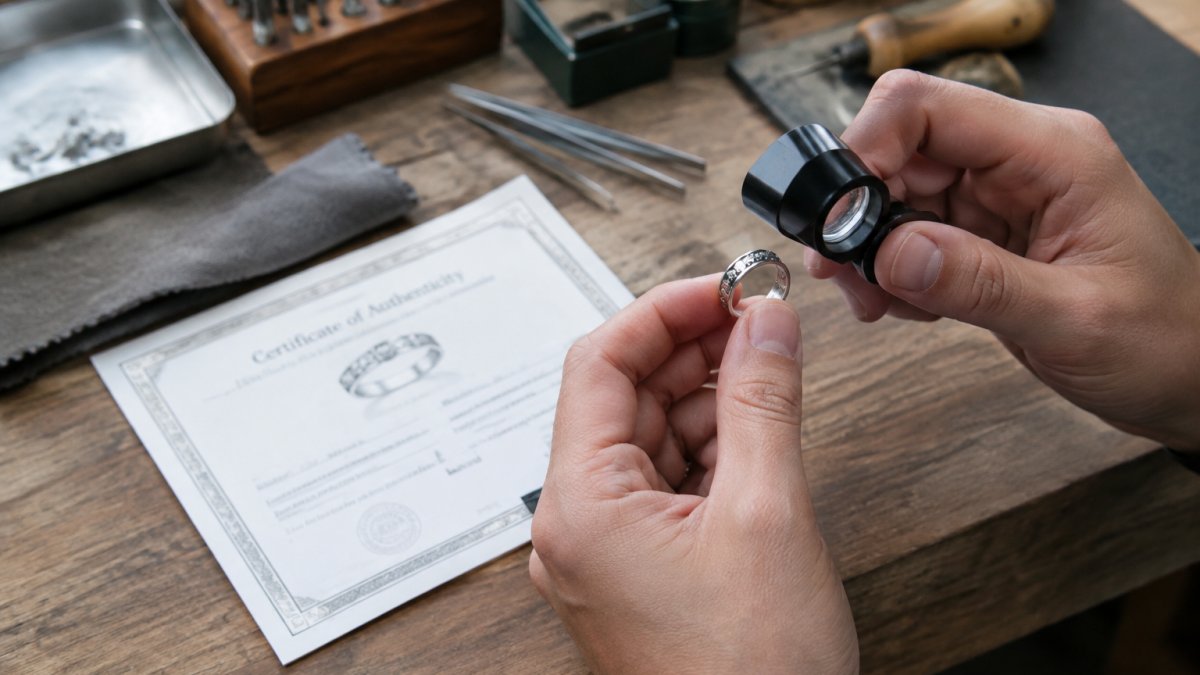
For a deeper walkthrough, our guide on how to verify ethical sourcing for artisan goods covers the paperwork trail in detail.
Questions That Reveal Whether a Supply Chain Is Real
- Which country was the metal refined in?
- Is the gemstone lab-grown, mined, or synthetic?
- Who assembled the piece, and where is that workshop?
Watch for answers that describe values instead of facts. "We care about the planet" is not a supply chain.
Spot Vague Ethical Claims and Greenwashing Before You Pay
Greenwashing in jewelry usually looks like a badge, not a lie. A leaf icon, the word "conscious," a stock photo of hands in soil.
The practical skill is separating a claim from evidence. A claim is a sentence on a product page.
The Three Evidence Tiers
Sort every ethical statement you encounter into one of three tiers. This is the fastest way to tell a real maker from a reseller with good copywriting.
| Tier | What It Looks Like | What It Proves |
|---|---|---|
| Assertion | "Sustainably made," "eco-conscious," "responsibly sourced" | Nothing on its own |
| Specific claim | "Recycled 18k gold," "fair-trade certified," "handmade in Oaxaca" | A checkable fact exists |
| Documented evidence | Certificate number, audit report, named refinery, named workshop | The claim can be verified |
A brand that stays in the assertion tier is not necessarily lying, but it has given you nothing to check. A brand that moves to the documented tier has accepted a standard it can be held to.
Warning Signs That a Claim Is Unverifiable
- The word "ethical" or "sustainable" appears without a definition, standard, or named issuer.
- A certification badge has no issuer name, no certificate number, and no link to a registry.
- Material descriptions use vague terms such as "silver-tone," "gold finish," or "genuine leather" instead of stated metal content and origin.
Watch out: a brand can display a real certification that covers only one part of the supply chain, for example, a recycled-metal mark that says nothing about where the stone came from. A real badge is not the same as full coverage.
How to Request Evidence Without Feeling Rude
Most small makers welcome a specific question because it lets them show what they know. Send a short message with one or two concrete asks rather than a broad "tell me about your ethics." Useful asks include:
- "Which country was the metal refined in, and can you name the refiner?"
- "Is the stone lab-grown, mined, or synthetic, and what documentation comes with it?"
- "Who assembled this piece, and where is that workshop located?"
- "Can you share a certificate of authenticity or a material receipt?"
A maker with a real supply chain answers quickly and specifically. A reseller deflects, changes the subject, or replies with values language.
Our guide to spotting dropshipped items online shows the photo and shipping patterns that give resellers away. The fastest single test remains the reverse-image search: if the same image appears on five unrelated stores, it is not handmade.
Compare Certifications and What Each One Actually Covers
No single certification covers everything, and that is the trap. A fair-trade mark speaks to labor. A recycled-content claim speaks to materials. Neither tells you whether the gemstone was traced.
Third-party verification is an audit by an independent body, not a self-declared claim. When a brand says "certified," ask: certified by whom, under which standard, and can I see the certificate number?
The Main Standards You Will See, and Their Scope
Most ethical jewelry certifications fall into a few families. Each covers a slice of the supply chain, not the whole of it.
| Standard family | What it typically verifies | What it usually does not cover |
|---|---|---|
| Fair-trade / fair-labor marks | Worker rights, safe conditions, fair pay at the certified operation | Gemstone origin, environmental impact of mining |
| Recycled-content standards | That metal content is recycled, with chain-of-custody documentation | Labor conditions at the refiner or workshop |
| Responsible mining standards | Environmental and social practices at mine sites | Downstream fabrication and retail |
| Gemstone traceability programs | Origin and chain of custody for specific stones | Metal sourcing, labor at the setting workshop |
| Laboratory-grown gemstone documentation | That a stone was grown, not mined, and its producer | Whether the setting and metal are ethical |
A common pattern is that a brand holds one certification and implies it covers the whole piece. Read the scope statement on the issuer's own site, not the brand's summary of it.
How to Read a Certificate Number
A real certificate is checkable. Ask the brand for the certificate number and the issuer's name, then look the number up on the issuer's registry. If the issuer has no public registry, ask what the certificate actually attests to and who signed it.
Watch out: some brands display a certification held by their supplier rather than by themselves. That can still be meaningful, but it means the brand is relying on someone else's audit, ask which entity is actually certified and what part of the supply chain it covers.
Self-Declared Versus Third-Party
Some claims are self-declared: "recycled gold," "conflict-free," "handmade." These can be true, but they are assertions until an independent body verifies them. Third-party certification is stronger because the brand does not control the audit. When a piece is expensive or you plan to keep it for years, prefer the third-party version of the claim.
A Short Checklist for Any Certification Claim
- Who issued the certification, and is the issuer independent of the brand?
- Which standard was applied, and what is its stated scope?
- Is there a certificate number, and can it be looked up on a public registry?
- Which entity is certified, the brand, the workshop, or the supplier?
If a brand cannot answer these five questions, treat the badge as decoration. If it can, you have found a seller who understands its own supply chain, which is the real signal you are looking for.
Ethical Gold Jewelry: Recycled, Fair Trade and Lab-Grown Compared
Ethical gold jewelry splits into three practical choices, and each trades off differently on cost, traceability and durability.
| Material | Traceability | Cost | Trade-off |
|---|---|---|---|
| Recycled gold | High, if documented | Similar to new gold | Supply is limited |
| Fair trade gold | High, certified | Higher | Fewer sources |
| Lab-grown diamonds | High, documented | 30-40% less than mined | Resale value differs |
| Mined gemstones | Variable | Wide range | Needs origin proof |
Lab-created gems run 30-40% cheaper than mined diamonds, according to Trustpilot's ethical jewelry guide. Sustainable gold jewelry is also growing because younger luxury shoppers prioritize values, notes Rose C Jewels' 2026 trend report. Our own approach favors documented materials over marketing language.
Best Ethical Jewelry Brands and How to Judge Them
The best ethical jewelry brands share one trait: they volunteer supply-chain detail before you ask. Judge any brand on four things: named makers, stated materials, a real return policy, and a reachable human. Price alone tells you nothing.
Pieces like our handcrafted Large Fula Silver Twist Earrings, made by Malian craftspeople, and our Ancient Roman Coin Pendant, which comes with a certificate of authenticity, show the kind of detail buyers can expect. For what to expect from handmade construction, read what quality to expect from handmade jewelry.
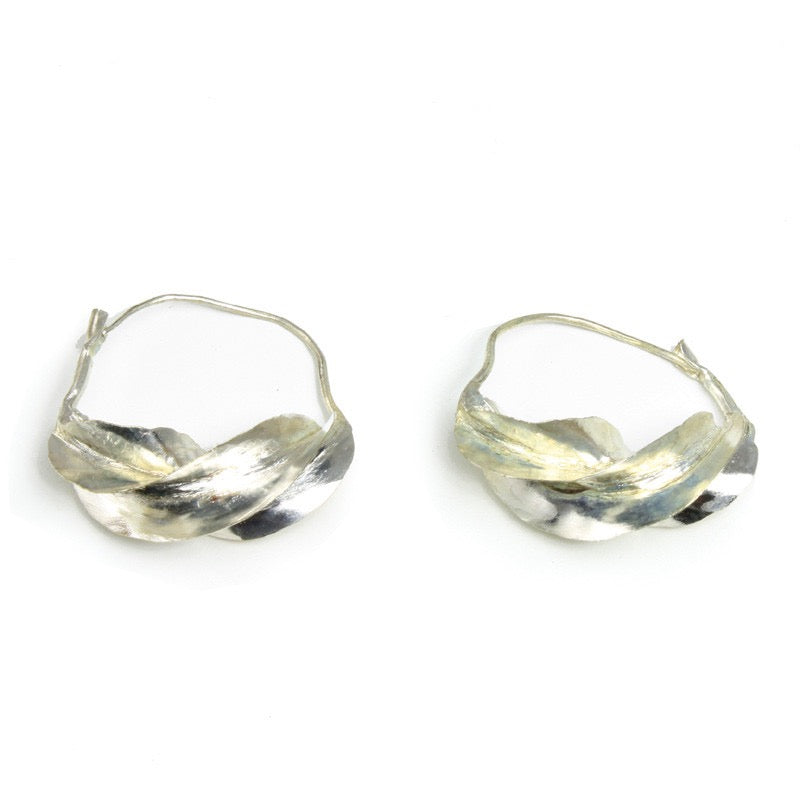
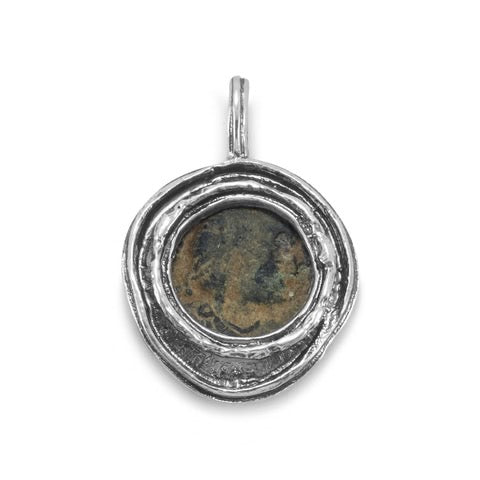
Best for: shoppers who want named makers and documented materials. Skip if: you need same-day delivery or mass-produced consistency.
Check Returns, Purchase Protection and Total Cost Before Checkout
Brands that keep customers tend to be the ones that handle returns fairly. Read the return window, who pays shipping, and whether custom pieces are excluded. Then calculate total cost: piece, shipping, duties, and the risk of a return you cannot make.
Handmade goods cost more than mass-produced ones for real reasons, which our guide on why handmade goods cost more explains. Judge value over years of wear, not the sticker price.
Shop the Artisan Square Collection With Confidence
The challenge is simple: most online jewelry stores cannot prove what they sell. If you want pieces that hold up to daily wear, start with our guide to handmade jewelry for daily wear, then browse the collection.
Ask us who made a piece before you buy it. We will tell you. Get started with The Artisan Square and shop handcrafted jewelry with a maker and a story behind every piece.
Frequently Asked Questions
What should I look for when buying ethical jewelry online?
Check four things before you pay: named material origin, a certificate or third-party verification, a real maker or workshop you can identify, and a returns policy that covers items that do not match the photos. Ethical jewelry listings should state whether metals are recycled and where gemstones come from. If a listing only says 'artisan made' with no country, workshop or certification, treat it as unverified until the brand answers directly.
How do I know if a brand uses recycled metals or conflict-free stones?
Ask for the specific claim in writing: which metal is recycled, what percentage, and which refiner or supplier provides it. For stones, ask for the country of origin and whether the supplier follows a recognized sourcing standard. Reputable makers answer these questions with detail. Vague replies like 'we care about the planet' without a named supplier are a warning sign. Price alone does not prove ethics.
Is it safe to buy handmade jewelry online?
It is safe when you buy from a seller who shows real product photography, lists exact materials and sizes, and offers a clear return window. Pay with a method that includes buyer protection, such as a credit card or a platform with dispute resolution. Read the returns policy before checkout, especially for earrings, which many sellers exclude for hygiene reasons. Keep the listing page and your order confirmation so you can compare what arrived against what was advertised.
What is the difference between sustainable and ethical jewelry?
Sustainable jewelry focuses on environmental impact: recycled metals, lower-carbon production, eco-friendly packaging and durability that keeps pieces out of landfill. Ethical jewelry focuses on people: fair labor, safe working conditions, artisan pay and supply-chain transparency. Most good buying guides treat them as overlapping, not identical. A piece can be recycled silver but made in a workshop with poor conditions, or fairly paid but using newly mined gold. Ask about both before you buy.
