

Quick Summary
Ethical sourcing for artisan goods is verified by tracking where materials come from and confirming the maker was treated and paid fairly. Start by identifying who made the piece and where, then ask for documentation of materials, such as supplier invoices or certificates of origin, and test the seller with specific questions.
- Check the maker's name, workshop, city and country on the product or about page.
- Ask for supplier invoices, certificates of origin, or fair trade certifications for the materials.
- Confirm the certification covers the exact item you are buying, not just the brand.
- Use QR-code product passports or batch records to verify provenance independently.
- Be wary of listings that say only artisan or handmade without naming a real maker.
Table of Contents
- What Ethical Sourcing Means for Handmade Goods
- How to Verify Ethical Sourcing Step by Step
- Artisan Supply Chain Transparency: What to Look For
- Questions to Ask Artisan Brands Before You Buy
- Ethically Sourced Handmade Jewelry: A Closer Look
- Why Handmade Prices Reflect Fair Compensation
- Choosing Your First Ethically Sourced Piece
- Frequently Asked Questions
How Do You Verify Ethical Sourcing for Artisan Goods?
Last Updated: October 28, 2026
What Ethical Sourcing Means for Handmade Goods
Ethical sourcing is the practice of tracking where materials come from and making sure the people who make a product are treated fairly. For handmade goods, that means knowing who shaped the piece, what it is made of, and whether the maker was paid a fair wage. At The Artisan Square, we see ethical sourcing as the foundation of trust between a buyer and a maker.
Consumer demand is pushing this practice forward.
Ethical sourcing covers a few core areas:
- Materials: Where the raw silver, wood, or fibers were obtained
- Labor: Whether makers work under fair conditions and earn fair pay
- Environment: How much waste and emissions the making process creates
- Traceability: Whether the origin of each part can be documented
How to Verify Ethical Sourcing Step by Step
Verifying ethical sourcing is a process you can follow on your own. You do not need special training. You need to ask the right questions and look for proof. Work through the steps below before you buy.
Check Who Made the Piece and Where
Start by finding out who actually made the item. Many listings use vague words like "artisan" or "handmade" without naming a real person or workshop.
Look for these details on the product page or the seller's about page:
- The maker's name or the name of their workshop
- The city and country where the item was made
- Photos of the maker or the workspace
Ask for Documentation of Materials
Next, ask what the piece is made from and where those materials came from. Verifiable sources include supplier invoices, certificates of origin, or fair trade certifications. The Forest Stewardship Council's guidance on certified sourcing explains how certification labels are meant to show that materials were responsibly sourced.
Keep in mind that a label alone does not prove everything. Ask the seller how they confirmed the label applies to the exact item you are buying.
The steps below sum up the verification process the article walks through, with what to check at each stage.
| Step | What to check | Where to look |
|---|---|---|
| Identify the maker | Maker name, workshop, city and country | Product page or about page |
| Document materials | Supplier invoices, certificates of origin, fair trade certifications | Seller's documentation |
| Confirm the label | Whether the certification covers the exact item | Ask the seller directly |
| Test the seller | Clear, specific answers to your questions | Seller's responses |
Artisan Supply Chain Transparency: What to Look For
Transparency matters because small makers often work with several partners. A silver piece, for example, may pass through a metal supplier, a jeweler, and a packaging team. Each partner should be named or described.
What a Transparent Chain Actually Looks Like
- Raw material origin, the mine, farm, forest, or recycler that produced the silver, wood, cotton, or stone. A transparent seller can name the region and, for metals, whether the material is newly mined or recycled.
- Processing or refining, where the raw material was turned into a usable form (for example, a refinery or a spinning mill). This is often the least visible step, so a seller who can describe it is a strong signal.
- Workshop or cooperative, the named maker or group that shaped the finished piece, including the city and country.
- Finishing and fulfillment, who handles polishing, packaging, and shipping, and whether those workers are also paid fairly.
Digital Traceability Tools Small Collectives Can Use
- QR-code product passports. A maker attaches a QR code to a hangtag that links to a page listing the maker, the material source, and the workshop. This is inexpensive and gives buyers a verifiable record they can check later.
- Batch-level record keeping. Instead of tracking every item, a collective assigns a batch number to each production run and keeps a simple log of material receipts, maker names, and dates. Buyers can ask for the batch record.
- Blockchain-based provenance, used sparingly. Some jewelry and textile collectives use blockchain registries to timestamp material transfers. It is not necessary for most small makers, and it adds cost, but it can be useful when a buyer needs tamper-resistant proof of origin.
- Photo and video documentation. Time-stamped photos of the workshop, the raw materials, and the finished piece are a low-tech form of traceability that many buyers accept.
Good Signs of Transparency
- Named workshops or cooperatives, with a city and country
- Clear descriptions of each production stage, including material processing
- Batch numbers, QR codes, or other records a buyer can check independently
- Willingness to answer follow-up questions, including about suppliers
- Consistent details across the product page, the about page, and the seller's answers
Research from Amazon Business's 2026 procurement trends report shows that buyers increasingly expect emissions and sourcing details to be part of their purchasing decisions. For artisan buyers, the practical version of that expectation is simple: if a seller cannot describe the chain, the claim is unverified.
Questions to Ask Artisan Brands Before You Buy
Asking direct questions is one of the fastest ways to test a brand's claims.
Try asking these questions:
Senegalese Basket with Lid - Large →
- Who made this specific piece?
- Where were the raw materials sourced?
- Can you share documentation for the materials?
- How are makers paid for their work?
- What happens if a product does not match the listing?
Pay attention to how the brand responds. Clear, specific answers are a good sign. Evasive answers are not.
Ethically Sourced Handmade Jewelry: A Closer Look
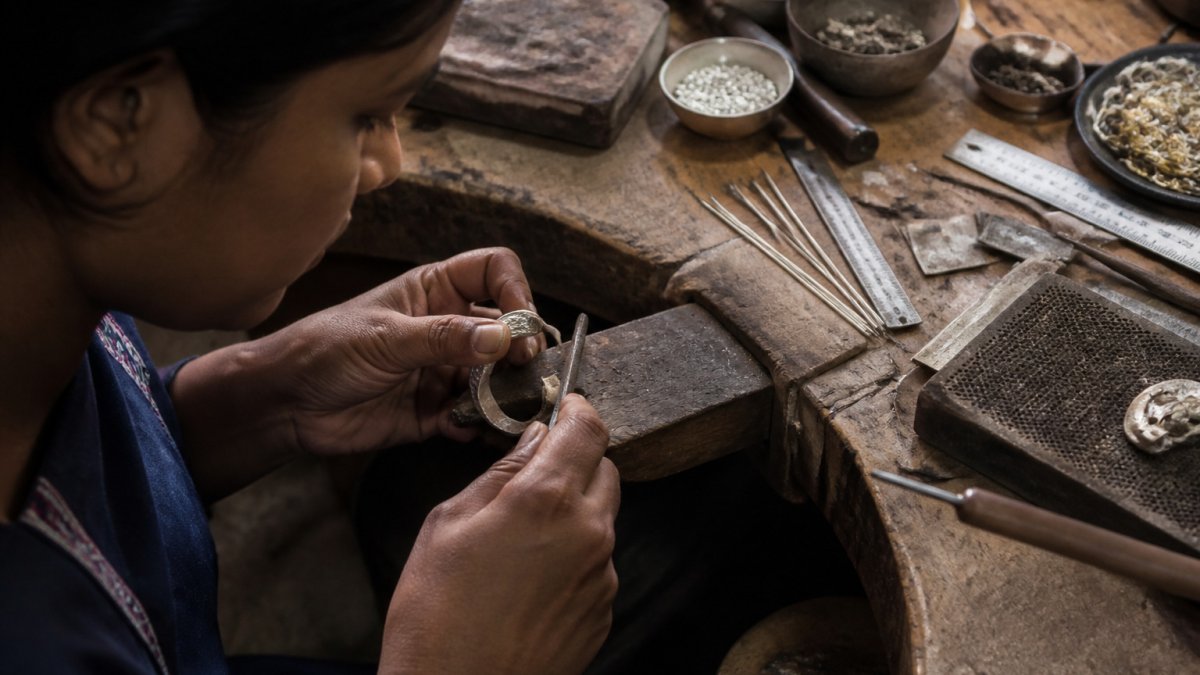
Take the Large Fula Silver Twist Earrings - 1½" as an example of what to look for. These earrings are handmade in Mali and reflect Fula silver craftsmanship. When you check a piece like this, look for the maker's details and clear material information, as described in the sections above.

Remember that cleaning and storage advice is also part of responsible care. A quality silver piece should last for years when stored properly.
Why Handmade Prices Reflect Fair Compensation
When you pay a fair price, you help makers stay in business and keep their craft alive. Mass-produced items often hide labor costs by moving production to places with low wages. Ethical handmade pricing makes those costs visible.
The 'Cost of Ethics': What the Price Premium Actually Pays For
- Maker time. A hand-shaped silver earring or a hand-woven textile can take hours per piece. Unlike a factory line, the maker's hourly rate is a direct cost.
- Material quality and traceability. Certified or traceable raw materials usually cost more than uncertified ones, and the paperwork to verify them takes time.
- Fair wage and benefits. A fair wage includes enough for the maker to cover living costs, not just a piece rate. Some cooperatives also fund healthcare, tools, or training.
- Compliance and documentation. Certifications, batch records, and audits carry fees and administrative time, especially for small workshops.
- Lower volume. Artisan production does not benefit from the same economies of scale as mass production, so fixed costs are spread across fewer items.
How to Judge Whether a Price Is Fair
- Compare the price with the stated maker time. If a seller says a piece took several hours, a very low price is a warning sign.
- Ask how makers are paid, per piece, hourly, or through a cooperative dividend, and whether the rate is set with maker input.
- Look for evidence that material costs are real, such as supplier names or certification records.
- Check whether the return policy and care instructions are clear; a fair price usually comes with fair after-sales terms.
For a broader look at how to build a thoughtful living space around artisan goods, see How to Curate a Sustainable Home Space.
Choosing Your First Ethically Sourced Piece
Follow this checklist before you buy:
-
I know who made the piece
-
I know where the materials came from
-
The seller answered my questions clearly
-
The return policy is clear
Frequently Asked Questions
What is the meaning of ethical sourcing?
Ethical sourcing means buying materials and products in ways that respect the people who make them, the environment they come from, and the fairness of the trade. For artisan goods, it covers fair pay for makers, safe working conditions, responsibly obtained raw materials, and a traceable path from raw material to finished piece. Ethical sourcing is about how something is made and traded, not only what it looks like. Because claims can be made without proof, buyers should look for documentation rather than relying on words like 'artisan' or 'natural' alone.
How can shoppers verify that handmade goods are ethically sourced?
Start by asking the seller who made the piece, where it was made, and where the materials came from.
What questions should you ask before buying artisan jewelry?
Ask where the metal or stones were sourced, whether the maker is named, and how the piece was produced. Find out whether the artisan receives fair compensation and whether the brand works with the same makers over time. For silver or gemstone pieces, ask whether the seller can provide any traceability information. A brand that answers these questions clearly is generally more transparent than one that cannot or will not answer them.
Every piece sold at The Artisan Square comes from makers we can name, and we answer sourcing questions directly. Browse the collection to find handcrafted goods you can feel good about.
