

Last Updated: November 5, 2026
Quick Summary
Choose natural shea butter for your face by picking unrefined shea for its retained fatty acids and vitamins, or refined shea if you want to avoid the nutty scent and color. Check that the label lists Butyrospermum parkii, the texture is soft and slightly grainy, and the scent is mildly nutty rather than perfumed.
- Unrefined shea keeps more natural fatty acids and vitamins than refined shea.
- Single-ingredient shea should list only Butyrospermum parkii on the label.
- Opaque or dark glass jars protect shea better than clear plastic tubs.
- Whipped shea is the easiest texture to start with for facial use.
- Store shea in a cool, dark place and replace it when it smells rancid.
Table of Contents
- Why Natural Shea Butter Belongs in a Face Routine
- Refined vs Unrefined Shea Butter for Skin
- How to Know If Shea Butter Is Real
- Which Shea Butter Is Best for Skin: Matching Type to Skin Type
- How to Choose Natural Shea Butter for Face Overnight Use
- Shelf Life, Storage, and Signs of Spoilage
- Build Your Face Care Routine with The Artisan Square
- Frequently Asked Questions
Why Natural Shea Butter Belongs in a Face Routine
The global shea butter market was valued at $2.6 billion in 2025, according to Grand View Research's shea butter market report, and it is projected to reach $5.0 billion by 2033. That growth tells you something simple: more people are putting shea on their faces. But knowing how to choose natural shea butter for face care is where most shoppers get stuck.
Natural shea butter is a fat pressed from the nuts of the African shea tree, used as an emollient that seals moisture into skin. At The Artisan Square, we stock shea in several textures, and the questions we hear most are about purity, skin type, and overnight use.
Here is the short version: shea works best as a barrier ingredient, not a standalone treatment. It softens dry patches, supports the skin barrier, and suits most skin types when you pick the right grade and texture. Below, we break down refined versus unrefined, how to spot the real thing, and how to build it into a routine.
Refined vs Unrefined Shea Butter for Skin
Unrefined shea butter is the raw, unprocessed fat with its natural color and nutty aroma intact. Refined shea butter has been filtered and treated to remove color and scent, giving a white, neutral product.
Which one should you put on your face? For most people, unrefined is the better pick. It keeps more of the natural fatty acids and vitamins found in raw shea. The trade-off is real, though: unrefined shea smells nutty and ranges from ivory to yellow, and some people dislike that on their face.
Better Shea Butter's guide to refined and unrefined shea notes that naturally refined shea suits anyone who wants to avoid the natural color and scent. That is a legitimate reason to choose it. Neither type is universally best for facial skin.
If you want to compare textures side by side, our butters collection lays out refined, unrefined, and other butter options in one place.
How to Know If Shea Butter Is Real
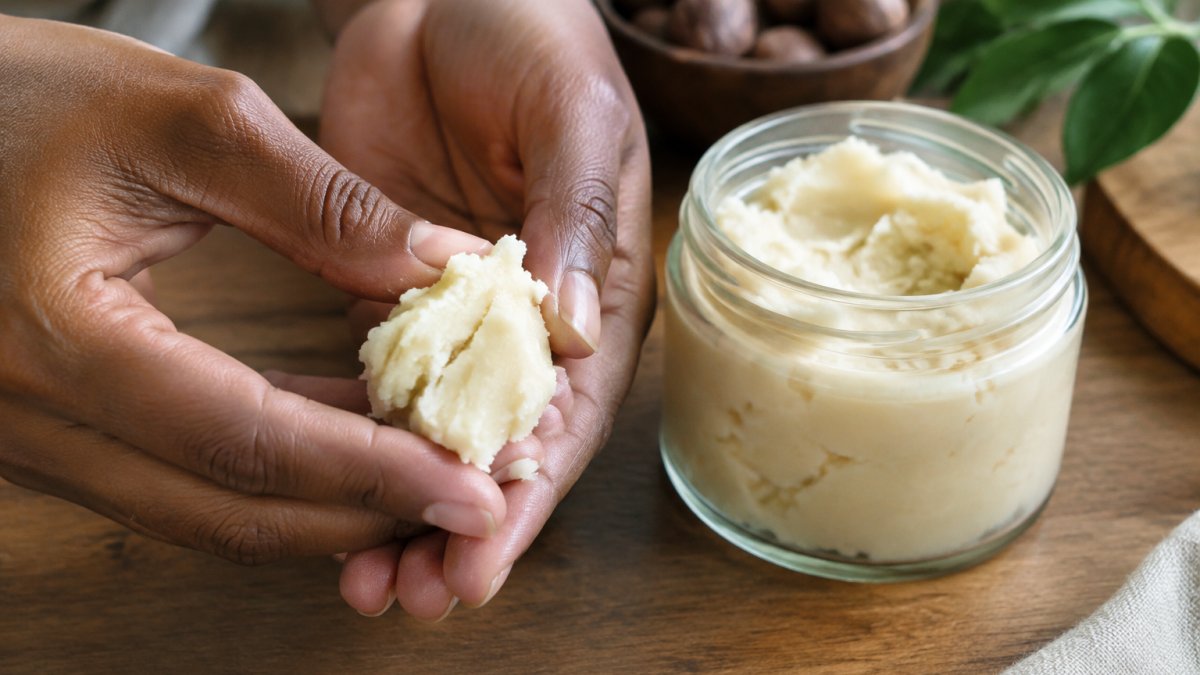
Shea butter is typically cream-colored to yellow, with a soft, grainy texture at room temperature and a faint nutty aroma. Use this buying checklist to evaluate a product before you apply it to your face.
Ingredient label
- The ingredient list should read Butyrospermum parkii (shea butter) and nothing else if you are buying a single-ingredient product. Avoid products that list "fragrance" or "parfum" without disclosure, especially for facial use.
- If the product is a blend, check that shea appears near the top of the list and that other ingredients are ones your skin tolerates. A long ingredient list is not automatically bad, but it gives more opportunities for irritation.
- Look for a named country of origin, such as Ghana, Burkina Faso, or Nigeria. Origin alone does not prove quality, but it is a transparency signal.
Packaging
- Shea butter is sensitive to heat and light. Opaque or dark glass jars and tins offer more protection than clear plastic tubs. A clear jar is not disqualifying, but store it away from sunlight.
- Check for a batch number or best-by date. A seller who provides these is more likely to have consistent handling.
- Avoid bulk bins or open containers in stores, where contamination and oxidation are more likely.
Scent
- Unrefined shea should smell mildly nutty, not perfumed or chemical. A strong, sharp, or rancid smell can indicate spoilage or added fragrance.
- Refined shea is nearly odorless by design. If a refined product smells strongly of nuts, ask why.
Texture
- At room temperature, shea should be soft and slightly grainy, melting on contact with warm skin. Graininess is normal, especially in unrefined shea, and does not mean the product is bad.
- A perfectly smooth, waxy texture can indicate refining or added ingredients. Neither is necessarily wrong, but it should match the label.
Seller transparency
- Look for a seller who discloses processing methods (unrefined, refined, filtered), country of origin, and whether the product is raw or whipped. Vague claims like "pure" or "natural" without details are weaker signals.
- Traceability claims can establish that a seller knows their supply chain, but they cannot prove the product is right for your face. Use them as one input, not a guarantee.
Our 100% natural African shea butter from Ghana lists a single ingredient, Butyrospermum parkii (Shea Butter).

Which Shea Butter Is Best for Skin: Matching Type to Skin Type
The best shea butter for your face depends on your skin type and the texture you can tolerate. Here is how the main options compare.
| Shea Type | Texture | Best For | Watch Out For |
|---|---|---|---|
| Unrefined raw | Grainy, firm | Dry and cracked skin | Nutty scent, yellow tint |
| Whipped | Soft, creamy | Sensitive and normal skin | Lighter coverage |
| Refined | Smooth, white | Scent-sensitive users | Fewer natural compounds |
| Bulk creamy | Rich, dense | Body and overnight use | Heavy under makeup |
Dry skin benefits most from raw or creamy shea, applied to damp skin. Oily and acne-prone skin should use shea sparingly: Natural Bulk Supplies' body butter guide suggests people with oily or acne-prone skin apply it lightly, and that guidance is worth following on the face too. Sensitive skin often prefers whipped shea because it spreads without tugging.
Our whipped shea butter comes in yellow or white and is the easiest texture to start with if you are new to facial shea.

How to Choose Natural Shea Butter for Face Overnight Use
Overnight is where shea earns its place. Apply a thin layer as the last step in your evening routine, after cleansing and any lighter serums, so it seals everything underneath. But before you commit to overnight use, you need a clear patch-testing plan and a realistic sense of how your skin reacts. This is the step most guides skip, and it is the one that matters most for facial use.
Shea Butter (African 100% Natural) →
How to choose natural shea butter for face overnight comes down to three things: texture, amount, and timing. A whipped or creamy shea spreads thin enough to sleep in. A raw, firm shea works better warmed between your palms first.
Patch Testing and Facial-Use Precautions
Patch testing before full-face use is a sensible precaution for any new product.
Individual skin reactions can vary, and no guide can tell you how your skin will react. If you have a known nut allergy, consult a healthcare professional before using shea on your face.
When to stop using it
- Redness, itching, or burning that does not settle within a few hours.
- New breakouts in areas where you applied shea.
- A change in the product's smell or texture, which can indicate spoilage.
Oily and acne-prone skin
Individual reactions to shea vary.
Sensitive skin
Whipped shea is often easier to spread without tugging, which reduces irritation. Introduce it gradually and keep the rest of your routine simple while you test it.
Our whipped shea butter comes in yellow or white and is the easiest texture to start with if you are new to facial shea.
Shelf Life, Storage, and Signs of Spoilage
Our creamy African shea lists a shelf life of 18 to 24 months.
Store it in a cool, dark place with the lid sealed, and keep an eye out for a sharp or rancid smell, a change in color, or a texture that does not smooth out when warmed.
Build Your Face Care Routine with The Artisan Square
Choosing shea is one decision. Building a routine around it is the next.
Start with a clean face, apply a light serum, then seal with a thin layer of shea. Use raw or creamy shea at night and whipped shea in the morning if you wear makeup. Patch test first, store it cool, and replace it when it smells off.
If you want to round out your shelf with more natural options, our guide to the best natural skincare brands for holistic health covers what to look for. And if you are still weighing handmade against mass-market products, read is handmade skincare better than commercial before you buy.
At The Artisan Square, we stock shea butter in whipped, creamy, and bulk sizes. Get started with The Artisan Square and build a face routine around ingredients you can actually trace.
Frequently Asked Questions
Which shea butter is best for the face?
Unrefined shea butter keeps the natural fatty acids, vitamins, and nutty aroma that refining can remove. If you prefer a white, unscented butter, naturally refined shea butter is an option.
How do I know if my shea butter is real?
Check the ingredient list: the Ghana shea butter from The Artisan Square lists Butyrospermum parkii (Shea Butter).
Can shea butter clog pores or cause breakouts?
Shea butter is an emollient commonly used for dry skin. Patch testing before full-face use is a sensible precaution for any new product.
How should I patch test shea butter before using it on my face?
Patch testing before full-face use is a sensible precaution for any new product.
