

Table of Contents
- Why Holistic Health Changes How You Choose Natural Skincare
- Quick Comparison: Best Organic Skincare Brands and Products
- Natural Skincare Ingredients That Actually Do Something
- How to Build a Holistic Skincare Routine That Fits Your Skin Type
- Organic Skin Care Products Worth Trying from The Artisan Square
- Common Mistakes When Buying Natural Skincare Brands
- Conclusion: Choosing Natural Skincare That Works for You
- Frequently Asked Questions
Last Updated: October 13, 2026
Why Holistic Health Changes How You Choose Natural Skincare
Holistic health treats skin as part of a whole person, not a separate surface to fix. That idea reshapes which natural skincare brands deserve your money, because a product that soothes your face while ignoring ingredient sourcing or skin barrier health solves only half the problem.
Most "best of" lists rank products by popularity. We rank them by what's inside the bottle, where ingredients come from, and whether the formulation respects your skin barrier.
Quick Comparison: Best Organic Skincare Brands and Products
Rather than ranking other companies, here are the categories of organic skin care products worth owning, what each does, and roughly what to pay. Use this as a shopping framework for any brand you evaluate.
| Product Category | What It Does | Key Ingredients to Look For | Typical Price Range |
|---|---|---|---|
| Sugar scrubs | Exfoliate and refresh | Sucrose, coffee, matcha | $25-$35 |
| Body butters | Deep moisture and barrier support | Shea, aloe, avocado | $8-$40 |
| Bar soaps | Gentle daily cleansing | Shea butter, argan oil, oatmeal | $6-$12 |
| Face oils and serums | Targeted nourishment | Plant oils, vitamin E | $20-$40 |
| Essential oils | Aromatherapy and blends | Single-origin botanicals | $15-$35 |
Handmade products cost more than mass-produced ones because small batches use pricier raw materials without industrial scale. That gap buys traceability, not marketing.
Natural Skincare Ingredients That Actually Do Something
Natural skincare ingredients are plant-derived or mineral substances used for cleansing, moisturizing, and protecting skin, versus synthetic compounds engineered for the same jobs. The distinction matters less than whether the ingredient has a clear function in the formula.
Here's what earns its place:
- Shea butter contains fatty acids that support moisture retention and help skin look smoother and more supple
- Aloe is valued for its soothing properties, particularly for dry, chapped, or irritated skin
- Avocado butter is rich and melts quickly, which makes it useful for stretch marks, scarring, and very dry patches
- Oatmeal is a gentle exfoliant and a common choice for sensitive skin
- Moringa oil brings vitamins A, B, and C along with anti-toxin properties
- Matcha provides antioxidant support alongside gentle exfoliation
An ingredient list is only half the story; the other half is concentration and sourcing.

Reading a Label Without Getting Fooled
Ingredient lists are ordered by weight, largest first. If a headline botanical appears near the bottom, there's very little of it in the jar, the single most useful thing to know before buying anything labeled "natural."
Look for short lists where you recognize most entries. Be skeptical of unqualified "fragrance," which can hide many compounds.
For broader context on how cosmetic ingredients are regulated and labeled, the U.S. Food and Drug Administration's cosmetic labeling guidance explains what manufacturers are required to disclose.
How to Build a Holistic Skincare Routine That Fits Your Skin Type
A holistic skincare routine is a short, consistent sequence of cleansing, treating, and moisturizing steps chosen for your skin type, using products whose ingredients you can trace. It needs the right four or five steps, not ten.
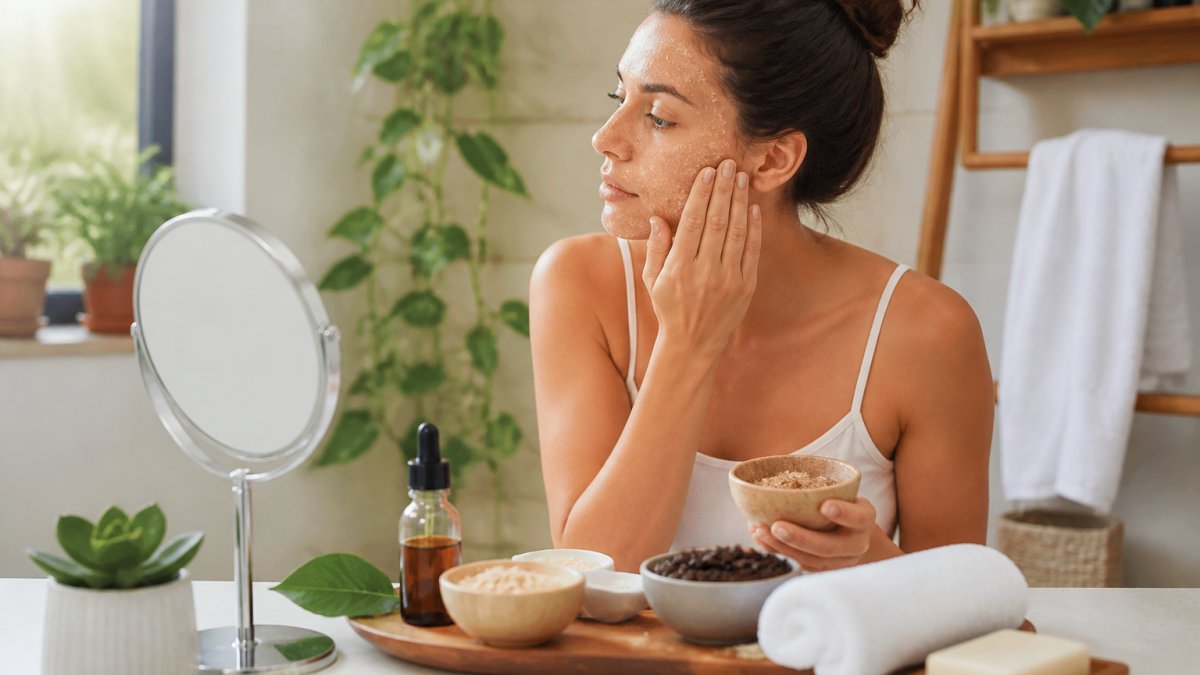
Build it in this order:
- Cleanse with a gentle bar soap suited to your skin
- Exfoliate two to three times a week, not daily
- Treat with a serum or facial oil targeted at your main concern
- Moisturize with a butter or cream while skin is still slightly damp
- Protect during the day and repeat consistently
Consistency beats intensity: skin responds to steady care over weeks, not one aggressive treatment.
A Shortlisting Method, Not a Roundup
Most "best natural skincare brands" lists hand you a ranked pile and let you guess.
Sensitive or reactive skin. Prioritize short ingredient lists, fragrance-free formulas, and oatmeal, chamomile, or colloidal-oat cleansers.
Dry or barrier-compromised skin. Look for butters and oils high in oleic and stearic fatty acids, shea, avocado, and aloe butter qualify, applied to damp skin to lock in water.
Oily or congestion-prone skin. Oily skin still needs moisture.
Acne-prone skin. This is where "natural" gets tricky: some botanical oils are comedogenic, and some essential oils irritate active breakouts.
How to Evaluate a Brand Once You've Shortlisted It
Once you have two or three candidate brands, run them through four questions:
- Ingredient transparency: Does the brand publish full INCI lists, or only highlight hero botanicals?
- Sourcing: Can they tell you where key ingredients are grown or pressed?
- Formulation logic: Do the ingredients have a stated function, or is the list a marketing collage?
- Return and sample policy: Can you try before committing to a full-size?
A brand that answers all four is worth your money; one that answers none is worth skipping, regardless of the front label.
Organic Skin Care Products Worth Trying from The Artisan Square
Our own collection is built around the principles above. Here's how the pieces fit together.
Foaming Coffee Sugar Scrub Face & Body Exfoliator →
For exfoliation, the Foaming Coffee Sugar Scrub combines sugar granules with coffee powder and foams as you massage it in. The Matcha Face & Body Sugar Scrub takes a gentler route at the same price, using fine sugar crystals and matcha for antioxidant support.


For moisture, Whipped Shea Butter at $25.00 is whipped to a soft, creamy texture that spreads easily, and its fatty acids make it effective for dry skin and hair alike. Aloe Butter at $39.99 is the richer option, made with virgin coconut oil and traditionally used for dry skin and chapping. Avocado Butter at $35.00 is expeller pressed and pure, doubling as a hair conditioner and lip balm.
On the cleansing side, the Vanilla Oatmeal Shea/Argan Soap at $10.00 is our pick for sensitive skin, while the Moringa Soap at $6.00 pairs moringa and neem oils with shea butter for daily nourishment. The Sulfur & Chamomile Mineral Soap at $10.00 is triple milled with Dead Sea salt, argan oil, and shea butter.
Common Mistakes When Buying Natural Skincare Brands
The biggest mistake is trusting the word "natural" on its own. It isn't a regulated guarantee: a product can carry it on the front label and still contain preservatives, synthetic fragrance, or fillers further down the list. The same goes for "clean," "green," and "botanical", none are legally defined in the U.S. cosmetic market, so they mean whatever the brand wants.
What Certifications Actually Tell You
If you want a label claim that carries weight, look for third-party certification rather than front-of-bottle language. A few worth knowing:
- USDA Organic applies to the agricultural ingredients in a product and requires a specific percentage of organic content. It says nothing about whether the formula is gentle, effective, or non-irritating.
- COSMOS and Ecocert are European certification schemes that combine organic-content thresholds with restrictions on certain synthetic ingredients and packaging standards.
- Leaping Bunny and Cruelty Free International verify animal-testing policies, useful if that's a priority, but silent on ingredient quality.
- EWG Verified reviews ingredient disclosures against the Environmental Working Group's own hazard criteria. It's a useful screen, but it is not a clinical safety certification.
Brands often display one certification prominently while quietly failing on the others. Read what each mark actually covers before letting it do your thinking.
Evidence vs. Marketing on Botanical Ingredients
Most botanical ingredients have traditional or in-vitro evidence, but far fewer have robust human clinical trials. That doesn't make them useless, it means calibrating expectations. A few honest distinctions:
- Well-studied topically: niacinamide, vitamin C (L-ascorbic acid), retinoids, salicylic acid, and broad-spectrum sunscreen filters have decades of human trial data. Many of these are synthetic or semi-synthetic, which is worth noting if "natural" is your priority.
- Moderate evidence: colloidal oatmeal, shea butter, and aloe have reasonable support for moisturizing and soothing. These are commonly used in dermatology-adjacent products for good reason.
- Traditional use, limited clinical data: moringa, matcha, and many single-origin botanical oils are valued for antioxidant content and traditional use, but the human-trial literature is thinner. That doesn't mean they don't work, it means claims about them should be read as plausible rather than proven.
When a brand claims a botanical "boosts collagen" or "detoxifies skin," ask what study they cite and whether it was done on human skin, in a lab dish, or on mice. The answer usually explains the claim's confidence level.
Other Mistakes That Cost You Money
People buy a full routine at once and can't tell what's working.
They skip the patch test and blame the product when skin reacts.
They assume expensive means better. Price reflects sourcing and batch size, not automatically quality. Read the list.
They buy for someone else's skin. A routine that transformed a friend's complexion may be wrong for yours entirely.
They treat "fragrance" as a single ingredient.
Conclusion: Choosing Natural Skincare That Works for You
The hard part isn't finding natural skincare. It's finding products whose ingredient lists you can read, whose sourcing you can trace, and whose formulas match your skin instead of a trend cycle.
At The Artisan Square, we curate handmade, handcrafted goods with that standard in mind, from natural hair care and aromatherapy to body butters and botanical soaps. Every item is chosen for natural ingredients and traditional craftsmanship, not shelf appeal.
Frequently Asked Questions
Which natural product is best for skin?
The best natural product depends on your skin type and concern. For dry skin, shea butter and avocado butter provide deep moisture. For sensitive skin, oatmeal-based soaps and aloe butter soothe without irritation. For dull or tired skin, a coffee or matcha sugar scrub gently exfoliates and brightens. Look for short ingredient lists with recognizable botanical names. The Artisan Square carries options like Whipped Shea Butter at $25.00 and Aloe Butter at $39.99 that suit different needs.
How can I tell whether a skincare brand uses genuinely natural ingredients?
Check the full ingredient list, not just the front label. Natural skincare ingredients appear as recognizable plant or mineral names, like shea butter, argan oil, or aloe. Be wary of vague terms like 'botanical blend' without specifics. Look for certifications such as organic certification or transparent sourcing claims. If a brand cannot tell you where ingredients come from or how the product was made, that is a red flag. Genuine natural skincare brands share this information openly.
Are natural skincare products suitable for sensitive skin?
Many natural skincare products suit sensitive skin, but not all. Oatmeal, chamomile, and aloe are known for their soothing properties. Avoid products with high concentrations of essential oils or added fragrance if your skin reacts easily. The Vanilla Oatmeal Shea/Argan Soap at $10.00 is formulated with sensitive skin in mind, and Aloe Butter is known for its soothing properties. Always patch-test a new product on a small area first.
What should I look for when choosing an organic skincare brand?
Look for ingredient transparency, clear sourcing information, and certifications where available. A holistic skincare routine benefits from products with short, readable ingredient lists and no hidden synthetic fillers. Check whether the brand explains its formulation process and where its ingredients come from. Price is not always a signal of quality, but very cheap products often cut corners on sourcing. Compare what each product offers for its price before deciding.
What are organic skin care products?
Organic skin care products are made with ingredients grown or produced without synthetic pesticides, fertilizers, or genetically modified organisms. They often carry organic certification from a recognized body. In practice, organic skin care products still contain preservatives for safety and shelf life, but the core ingredients come from organic farming. The distinction matters most for people who want to minimize exposure to synthetic chemicals in their daily routine.