

Last Updated: November 2, 2026
Quick Summary
The best castor oil for hair is a cold-pressed, unrefined, single-ingredient oil, ideally in dark glass or opaque packaging. Use it as a moisturizer and sealant for dry scalps and coarse strands, not as a proven growth treatment, since current evidence does not show topical castor oil reliably promotes hair growth.
- Castor oil's ricinoleic acid gives it a thick, syrupy texture that seals moisture into dry ends.
- Jamaican black castor oil is made from roasted beans and is not a clinical upgrade over pale castor oil.
- Apply a few drops per section along part lines and rinse out within a few hours to overnight.
- Patch test a drop behind the ear for 24 hours, then a quarter-sized scalp patch for another 24 hours.
- Sudden, patchy, or painful shedding calls for a dermatologist rather than another oil.
Table of Contents
- What Makes Castor Oil Good for Hair and Scalp?
- Jamaican Black Castor Oil for Hair: What Sets It Apart
- Cold-Pressed Castor Oil for Hair: Why Processing Matters
- How to Use Castor Oil on Scalp Without the Mess
- Castor Oil Side Effects for Hair: What to Watch For
- How to Choose a Castor Oil Product: A Buyer's Checklist
- When Castor Oil Isn't Enough: Hair Loss Causes and Next Steps
- Finding Your Castor Oil Match at The Artisan Square
- Frequently Asked Questions
What Makes Castor Oil Good for Hair and Scalp?
Castor oil is a thick, plant-based oil pressed from castor beans, and it earns its place in hair care mostly as a moisturizer and sealant rather than a proven growth treatment. Castor oil tends to suit dry scalps and coarse strands that need help holding onto moisture.
The Fatty Acid Profile That Matters
Castor oil's texture comes from ricinoleic acid, which makes up the bulk of the oil and gives it that thick, syrupy feel. That thickness is why it clings to hair ends and scalps instead of running off.
What this means in practice:
- Sealing: A thin layer slows moisture loss from dry ends and protective styles.
- Slip: The oil adds glide when you detangle coarse or curly hair.
- Scalp comfort: Massaged in lightly, it can soften a dry, tight scalp.
None of that is the same as regrowing hair. Keep the two ideas separate and you will judge products far more clearly.
What the Evidence Actually Shows
A narrative review of castor oil in dermatology describes castor oil as a potentially versatile and accessible ingredient but calls for further clinical investigation to establish its uses. That is the honest state of the science.
Dermatology Times has reported that current evidence does not demonstrate that topical castor oil reliably promotes hair growth, and other dermatology commentary notes that human research has not shown pure castor oil reliably increases scalp-hair growth, density, or follicle size.
So what is it good for? Moisture, conditioning, and scalp comfort. Treat growth claims as marketing until better research exists.
Jamaican Black Castor Oil for Hair: What Sets It Apart
Jamaican black castor oil is made from roasted beans, giving it a darker color, smokier scent, and thicker body than the pale cold-pressed version.
Cold-Pressed Castor Oil for Hair: Why Processing Matters
Look for these labels:
- Cold-pressed: pressed without high heat
- Unrefined: filtered but not bleached or deodorized
- Organic: grown without synthetic pesticides, where certification supports the claim
A common mistake is buying a large bottle of a heavy oil before testing how your scalp reacts. Buy small, patch test, then commit.
How to Use Castor Oil on Scalp Without the Mess
Castor oil can be applied to the scalp in small amounts along the part lines, then massaged gently with fingertips.
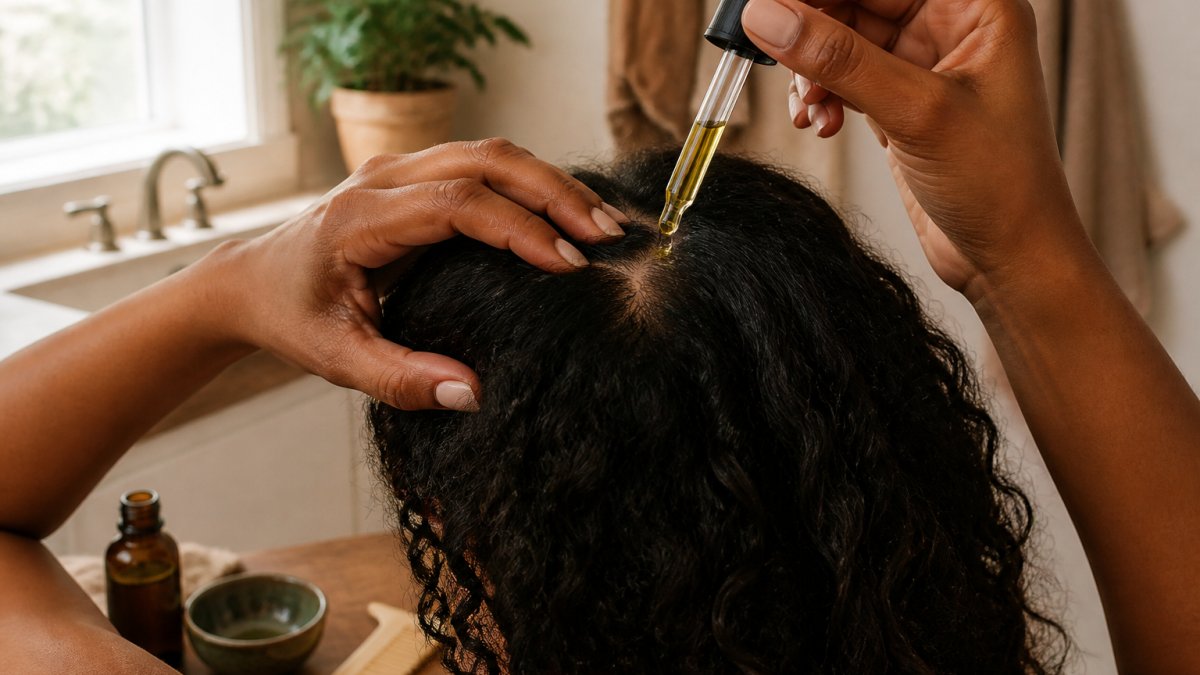
Practical steps that keep the process tidy:
- Work on dry or slightly damp hair, not soaking wet.
- Part hair in sections and apply a few drops per section.
- Massage the scalp with fingertips, not nails.
- Smooth any leftover oil through the ends.
- Cover with a towel or shower cap if you plan to leave it in.
Choosing the Right Amount and Frequency
If your scalp feels congested or itchy after use, cut back before you cut out.
Washout and Residue Control
Watch out: leaving heavy oil on the scalp for days can trap buildup and irritate sensitive skin. Rinse it out within a few hours to overnight, not longer.
Shampoo & Conditioner (Black Castor Oil) →
Castor Oil Side Effects for Hair: What to Watch For
Castor oil is generally well tolerated, but the most common problems, irritation, itching, redness, and buildup, are usually application errors, not allergies. The difference matters: one calls for using less, the other for stopping.
Patch Test Before You Commit
- Put a single drop on the inner forearm or behind the ear.
- Leave it uncovered for 24 hours without washing the area.
- Check for redness, itching, swelling, or a rash.
- If there is no reaction, apply a small amount to a quarter-sized patch of scalp and wait another 24 hours before a full application.
Irritation vs. Adjustment: How to Tell the Difference
- Redness at the hairline or part lines that persists after rinsing
- Itching that starts after application and gets worse, not better
- Small bumps or breakouts along the forehead where oil has migrated
- Scaling, crusting, or open sores, stop using the oil and see a clinician
- Swelling or difficulty breathing, this is an emergency; seek care immediately
Sensitive and Inflamed Scalps
People with oily or congestion-prone scalps should treat castor oil as an occasional pre-wash treatment, not a leave-in. The same thickness that seals moisture into dry ends can seal sebum and product residue against the scalp.
Buildup: The Most Common Complaint
If you are worried about hidden irritants in your wash-day routine, our breakdown of natural hair care and sulfates explains what to check on the label.
How to Choose a Castor Oil Product: A Buyer's Checklist
Most castor oil roundups tell you what to buy without telling you how they decided. Here is the filter we use, so you can apply it to any bottle, including ones we do not carry.
How We Assess a Castor Oil
- Ingredient transparency. The label should name Ricinus communis seed oil and disclose every other ingredient. A "pure" castor oil should have one ingredient; a blend should list castor oil's position so you can judge concentration.
- Processing claim. Cold-pressed and unrefined claims should appear on the label, not just in marketing copy. If a brand says "cold-pressed" but the ingredient list reads "hydrogenated castor oil" or "PEG-40 hydrogenated castor oil," it is a cosmetic ingredient, not a treatment oil.
- Packaging. Dark glass or opaque plastic slows oxidation; clear bottles are a warning sign for an oil you plan to keep for months.
- Value per ounce. Divide the price by the fluid ounces. A small bottle of a single-ingredient oil and a large bottle of a diluted blend are not comparable until you do the math, and a blend with castor oil far down the list is mostly carrier oil.
- Suitability for use case. A thick, unrefined oil suits scalp massage and ends; a lighter blend suits fine hair and daily use. Match the format to the job, not to the label's growth claim.
Reading the Label Like an Editor
A few label patterns are worth knowing before you buy:
- "100% pure castor oil", should mean one ingredient. Check the back, not the front.
- "Jamaican black castor oil", describes the roasting method, not a strength grade. It is not a clinical upgrade over pale castor oil.
- "Castor oil blend", castor oil may be 5% or 50% of the bottle. The ingredient order tells you which.
- "Cold-pressed", a processing claim, not a purity claim. A cold-pressed oil can still be diluted.
- "For hair growth", a marketing phrase, not a regulated claim. Judge the ingredient list, not the promise.
Format Comparison: What Each Type Is Actually For
| Product format | Best for | Watch out for |
|---|---|---|
| Cold-pressed, unrefined castor oil | Dry scalp, coarse hair, pre-wash massage | Heavy feel on fine hair; needs shampoo to remove |
| Jamaican black castor oil | Ends, edges, protective styles | Smokier scent; can look greasy if overused |
| Castor oil blends | Fine hair, daily use, leave-in finishing | Lower castor oil concentration; check ingredient order |
| Castor oil shampoo and conditioner | Full wash-day routine | Rinse-off product, not a leave-in treatment |
A blend is not a lesser product, it is a different tool. The mistake is buying a heavy, single-ingredient oil for fine hair and concluding castor oil does not work, when the format was the problem.
The Pre-Purchase Test
Before you commit to a full bottle: patch test a drop behind the ear, check the ingredient list against the five criteria above, and confirm the return policy. A brand that will not take back a product your scalp reacted to is telling you something.
When Castor Oil Isn't Enough: Hair Loss Causes and Next Steps
Castor oil will not fix hair loss caused by genetics, hormonal changes, thyroid issues, nutritional deficiencies, or medication. If shedding is sudden, patchy, or comes with scalp pain, see a dermatologist rather than adding another oil to the routine.
Signs it is time to get help:
- Sudden or patchy shedding
- Scalp pain, scaling, or open sores
- Hair loss that continues after months of gentle care
- Thinning at the crown or temples that keeps progressing
For many people, castor oil is one small part of a routine that also includes gentle cleansing, a compatible conditioner, and patience. If you want to build out that routine with complementary options, our roundup of natural shampoos for hair growth is a useful next read.
Finding Your Castor Oil Match at The Artisan Square
Our Black Jamaican Castor Shampoo and Conditioner Set contains Jamaican black castor oil, coconut oil and shea butter. You can shop our black castor oil shampoo and conditioner.

Frequently Asked Questions
Which type of castor oil is most effective for hair growth?
There is no single most effective type. Jamaican black castor oil is darker and thicker because the beans are roasted before pressing, which gives it a stronger scent and heavier texture. Cold-pressed castor oil is lighter in color and retains more of its natural composition because no heat is used. Your choice should depend on your hair type, scent preference, and how much residue you can tolerate, not on claims of superior growth.
How should you apply castor oil to your scalp?
Part your hair in sections and use a dropper to place a small amount of castor oil directly on the scalp, not the hair lengths. Massage gently with your fingertips for two to three minutes to spread it evenly.
What are the downsides of using castor oil on hair?
Castor oil is thick and can leave residue that weighs down fine hair or clogs pores on the scalp if not washed out properly. Some people experience irritation, itching, or allergic reactions, which is why a patch test matters. Its scent, especially in Jamaican black castor oil, is strong and may not suit everyone. The biggest downside is unrealistic expectations:
Can castor oil cause scalp irritation or clogged pores?
Yes, both are possible. Castor oil is a heavy oil, and leaving too much on the scalp without washing it out can trap dirt and sebum, leading to clogged pores and discomfort.
Castor oil rewards a light hand and realistic expectations. If you want products built around natural ingredients and traditional methods, The Artisan Square curates handcrafted hair care with clear ingredient lists, small-batch sourcing, and a focus on holistic self-care. Browse the collection and build a routine that fits your hair.
