

Table of Contents
- What Makes Natural Shampoo for Hair Growth Different
- Quick Comparison: Top Natural Shampoos
- 1. Rosemary & Mint Shampoo: Best for Scalp Stimulation
- 2. Black Jamaican Castor Oil Shampoo: Best for Moisture & Strength
- 3. African Chebe Shampoo & Conditioner Set: Best for Length Retention
- Natural Shampoo Ingredients for Healthy Hair: What Actually Works
- How to Choose a Clean Shampoo: Your Selection Framework
- DIY Shampoo for Hair Growth: When to Make Your Own
- Frequently Asked Questions
Last Updated: October 16, 2026
What Makes Natural Shampoo for Hair Growth Different
Natural shampoo hair growth works by targeting your scalp and roots, not just the surface.
Natural formulations use plant-based ingredients that cleanse without stripping, letting your scalp breathe and follicles thrive. At The Artisan Square, we've curated products designed to support hair strength, reduce breakage, and create the conditions for healthier growth.
Natural shampoos for hair growth typically contain rosemary, castor oil, and chebe powder, botanicals that improve scalp circulation, reduce inflammation, and nourish from root to tip. Switching to a natural shampoo for healthy hair growth shifts you from damage prevention to active support.

Quick Comparison: Top Natural Shampoos
| Product | Price | Best For | Key Ingredient | Format |
|---|---|---|---|---|
| Rosemary & Mint Shampoo & Conditioner | $34.99 | Scalp stimulation and dandruff relief | Rosemary extract with aloe vera | Paired set |
| Black Jamaican Castor Oil Shampoo & Conditioner Set | $34.99 | Moisture, strength, and reduced breakage | Black castor oil with shea butter | Paired set |
| African Chebe Shampoo & Conditioner Set | $35.00 | Length retention and breakage prevention | Chebe powder with jojoba oil | Paired set |
1. Rosemary & Mint Shampoo: Best for Scalp Stimulation
Your scalp health determines whether your hair can grow. This natural shampoo for hair growth targets that foundation directly. The Shampoo & Conditioner-Rosemary & Mint combines rosemary extract with aloe vera to balance scalp conditions while improving circulation.

Rosemary increases blood flow to follicles, delivering more nutrients to each strand, while its anti-inflammatory properties address flaking and irritation. It cleanses without stripping, removing buildup while maintaining natural oils.
The mint adds a cooling sensation. For dandruff, sensitivity, or a tight scalp, it addresses the root cause rather than masking symptoms.
2. Black Jamaican Castor Oil Shampoo: Best for Moisture & Strength
If your hair feels dry, breaks easily, or sheds more than you'd like, this addresses the problem directly. The Black Jamaican Castor Oil Shampoo & Conditioner Set pairs a cleansing shampoo with a deep-conditioning formula that restores moisture and builds strength.
Combined with shea butter and virgin coconut oil, this natural shampoo for hair growth reduces breakage and makes strands visibly stronger.
The shampoo removes daily buildup without harsh chemicals, and the conditioner locks in moisture for hours. It works particularly well for textured hair.
3. African Chebe Shampoo & Conditioner Set: Best for Length Retention
Chebe is a traditional African hair treatment used for generations to support length retention and prevent breakage. The African Chebe Shampoo & Conditioner Set brings this approach into a modern natural shampoo for hair growth format.

Chebe powder creates a protective coating that seals in moisture and shields strands from environmental stress. Combined with jojoba and castor oil in both the shampoo and conditioner, it tackles the biggest barrier to growth: breakage. Perfect scalp health won't help if your ends keep breaking.
This set is ideal if your goal is specifically longer hair. Use it as your regular shampoo and conditioner: it cleanses thoroughly while building that protective layer.
Natural Shampoo Ingredients for Healthy Hair: What Actually Works
Understanding what's in your natural shampoo for hair growth matters more than marketing claims. A shampoo is a rinse-off cosmetic: it can support scalp comfort, reduce breakage, and improve how hair looks and feels. Below, ingredients with real evidence are separated from those with traditional or anecdotal backing.
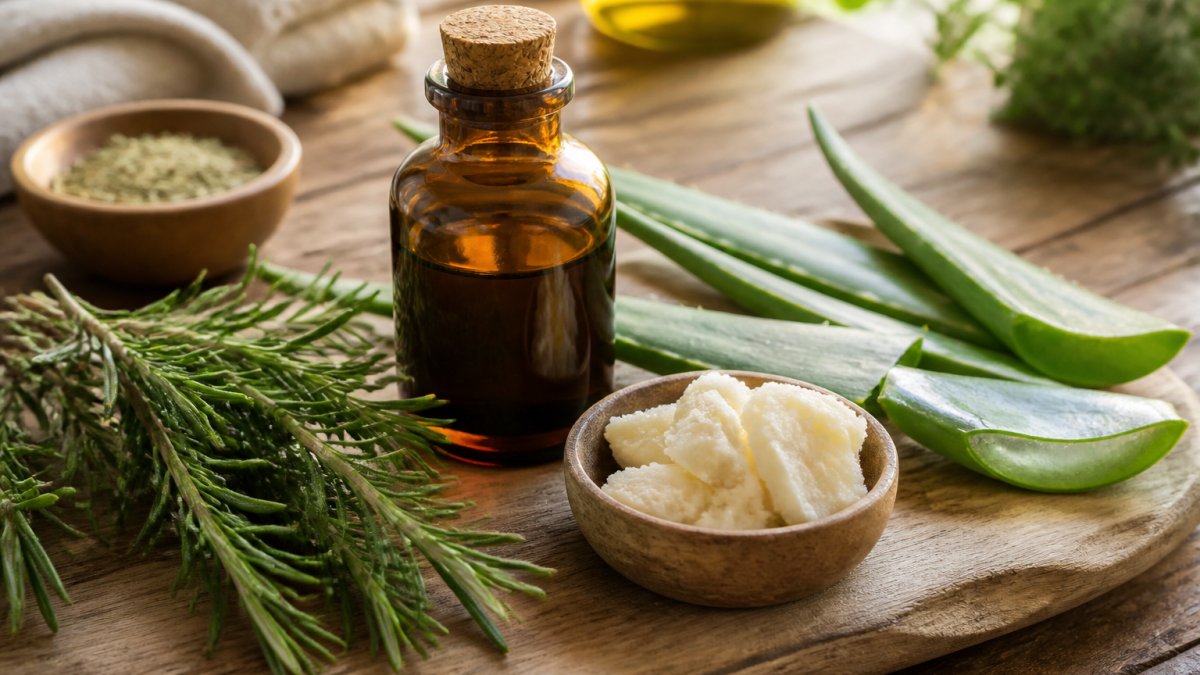
Ingredients with the strongest evidence for scalp and hair support
Rosemary (Rosmarinus officinalis). The most-studied botanical here. In a shampoo, contact time is minutes, so treat rosemary as scalp-soothing and circulation-supporting. A reasonable first pick for a flaky, tight, or irritated scalp.
Caffeine. Has in-vitro evidence of counteracting DHT, a hormone linked to follicle miniaturization, and some leave-on products show modest effects. In a shampoo, exposure is brief and diluted, so the benefit is limited.
Ketoconazole (in medicated formulas). Not a botanical, but the one shampoo ingredient with genuine clinical evidence for a specific hair-loss type (seborrheic dermatitis-related shedding). If your scalp is persistently itchy, flaky, and inflamed, an OTC medicated shampoo may be an option, see a clinician if it persists.
Ingredients with traditional or conditioning support
Black castor oil. Denser and more occlusive than regular castor oil. Its main job is sealing moisture into the strand and reducing friction-related breakage. Best for dry, textured, or high-porosity hair.
Chebe powder. A traditional Chadian blend used for centuries to coat strands and reduce breakage. The mechanism is physical, a waxy, protective layer, not biological, so it helps length retention by protecting ends.
Shea butter. A rich emollient high in fatty acids that reduces brittleness and frizz and improves manageability. Excellent for dry hair; can weigh down fine hair.
Shampoo & Conditioner-Rosemary & Mint →
Jojoba oil. A liquid wax ester resembling human sebum. It conditions without greasy residue and can help balance an oily scalp. Lightweight and well tolerated.
Aloe vera. Soothing and mildly hydrating. Helpful for irritated or sun-exposed scalps.
What to watch for in the formula
- Concentration and position on the label. Ingredients are listed by weight. If rosemary or chebe appears near the bottom of a long list, the amount is likely cosmetic rather than functional.
- Rinse-off vs. leave-on. A shampoo can prepare the scalp.
- Sulfate-free does not mean irritation-free. Many "natural" shampoos replace sulfates with other surfactants that can still sting sensitive scalps.
- Essential oils are a common irritant. Rosemary, mint, tea tree, and citrus oils are frequent causes of contact dermatitis. See the safety section below before committing.
Most people need 6-8 weeks to notice changes in breakage and shedding, and 3-4 months for meaningful length retention.
How to Choose a Clean Shampoo: Your Selection Framework
Not every natural shampoo works for every hair type, and "natural" isn't automatically safe. Use this framework to compare options, screen for sensitivity, and recognize when the problem is bigger than a shampoo.
Step 1: Rule out a medical cause first
Before optimizing a shampoo, check whether shedding or thinning has a cause a shampoo can't fix. Increased shedding 2-3 months after stress, illness, major weight loss, or childbirth is usually temporary. See a doctor or dermatologist if you notice:
- Sudden or patchy hair loss, or loss with scalp pain, scaling, or redness
- Thinning that continues for more than 6 months
- Loss accompanied by fatigue, unusual cold sensitivity, or other systemic symptoms
- Thinning in a pattern that suggests a hormonal or thyroid issue
A shampoo can support a healthy scalp but cannot correct a nutritional deficiency, thyroid condition, or autoimmune cause. Checking first saves months of trial and error.
Step 2: Compare on consistent criteria
Line up products and ask the same six questions of each to avoid being swayed by packaging or a single hero ingredient.
| Criterion | What to look for |
|---|---|
| Hair type | Fine hair → lightweight (rosemary, jojoba). Textured/coily → richer (castor, shea, chebe). |
| Scalp concern | Flaky/irritated → soothing (rosemary, aloe). Oily → balancing (jojoba). Dry → moisturizing. |
| Ingredient position | Functional ingredients should appear in the top half of the list, not the last three. |
| Fragrance | Fragrance-free or naturally scented with low-allergen options if you're sensitive. |
| Cost per ounce | Divide price by size. A "cheap" bottle can cost more per wash than a larger one. |
| Evidence | Does the brand explain what the ingredient does, or just claim "growth"? |
Step 3: Screen for sensitivity and allergy
Essential oils and botanical extracts are the most common culprits in reactions to "natural" shampoos. Rosemary, mint, tea tree, lavender, and citrus oils are frequent contact allergens. If your scalp is reactive:
- Patch test first. Apply a small amount behind your ear or on your inner forearm, wait 24-48 hours, and check for redness, itching, or bumps.
- Choose fragrance-free where possible. "Natural fragrance" is not the same as fragrance-free.
- Introduce one new product at a time so you can identify the trigger if a reaction occurs.
- Stop use and see a clinician if you develop persistent itching, burning, or a rash, this may be contact dermatitis, which needs treatment, not a different shampoo.
Step 4: Match the formula to your situation
- Fine, thin hair: lighter formulas (rosemary, jojoba) that won't weigh strands down.
- Textured, coily hair: castor oil, shea, or chebe for moisture and breakage protection.
- Color-treated or chemically processed hair: prioritize moisture and protection over stimulation; processed hair is more fragile.
- Oily, flaky scalp: rosemary-based formulas; consider a medicated shampoo if flaking is persistent.
- Dry, sensitive scalp: pair any gentle shampoo with a moisturizing conditioner; avoid high-fragrance formulas.
Step 5: Set a realistic evaluation window
Wash frequency depends on your scalp: oily scalps often do well with every 1-2 days, drier scalps with every 3-4 days. Always condition after shampooing, that's where most strength and slip comes from. Give any new routine 6-8 weeks before judging it and 3-4 months before expecting visible length retention. Track scalp comfort, breakage, and shedding rather than length alone, since length is the slowest signal to move.
Ingredient transparency as a tiebreaker
When two products look equal, let transparency decide. Look for full ingredient lists, clear sourcing, and no vague "proprietary blend" language hiding the actives. The Chebe Powder at The Artisan Square is a useful reference: 100% pure, no additives, and the label tells you exactly what you're getting. Expect that standard, full disclosure, no hidden silicones or sulfates, from any brand you trust with your scalp.
DIY Shampoo for Hair Growth: When to Make Your Own
Making your own natural shampoo hair growth formula is possible, with trade-offs worth understanding.
Homemade shampoos typically use a castile soap or potassium hydroxide base mixed with carrier oils like castor or coconut, then infused with herbs like rosemary.
DIY makes sense if you have severe preservative sensitivities or want to experiment with ratios; it doesn't if you want reliable results or convenience.
Choosing the right natural shampoo for hair growth means matching the formula to your hair and scalp needs. The Artisan Square's products support scalp health, reduce breakage, and create conditions for stronger growth.
Frequently Asked Questions
What is the best natural shampoo for hair growth?
The best natural shampoo for hair growth depends on your scalp condition and hair type. Rosemary-based shampoos stimulate blood flow to hair follicles, while castor oil formulas strengthen existing strands and reduce breakage. African Chebe shampoos excel at length retention. Look for products with transparent ingredient lists, no sulfates or silicones, and ingredients proven to support scalp health. The Artisan Square offers three strong options at $34.99-$35.00, each targeting different growth priorities.
Which natural shampoo ingredients support a healthy scalp?
Rosemary has anti-inflammatory and antibacterial properties that cleanse the scalp and soothe irritation. Castor oil nourishes and removes product build-up. Shea butter and jojoba oil provide moisture without stripping. Aloe vera soothes and balances scalp conditions. Chebe powder creates a protective moisture barrier. These ingredients work best when combined in formulas without harsh sulfates or synthetic detergents that can disrupt your scalp's natural balance.
Can natural shampoo help reduce hair breakage?
Yes. Natural shampoos with strengthening ingredients like rosemary, castor oil, and chebe powder can reduce breakage by hydrating hair strands, sealing moisture, and strengthening roots. Castor oil's rich nutrients coat each strand. Most effective routines combine both through moisturizing shampoos and scalp-stimulating treatments.
How long does it take to see results from a natural hair-growth shampoo?
Most users notice improved scalp comfort and reduced flaking within 2-4 weeks. Visible changes in hair thickness and reduced shedding typically appear after 6-8 weeks of consistent use. Full results in length retention and density can take 3-6 months, since hair growth cycles are slow. Consistency matters: use your chosen shampoo regularly as directed, and pair it with a conditioner.